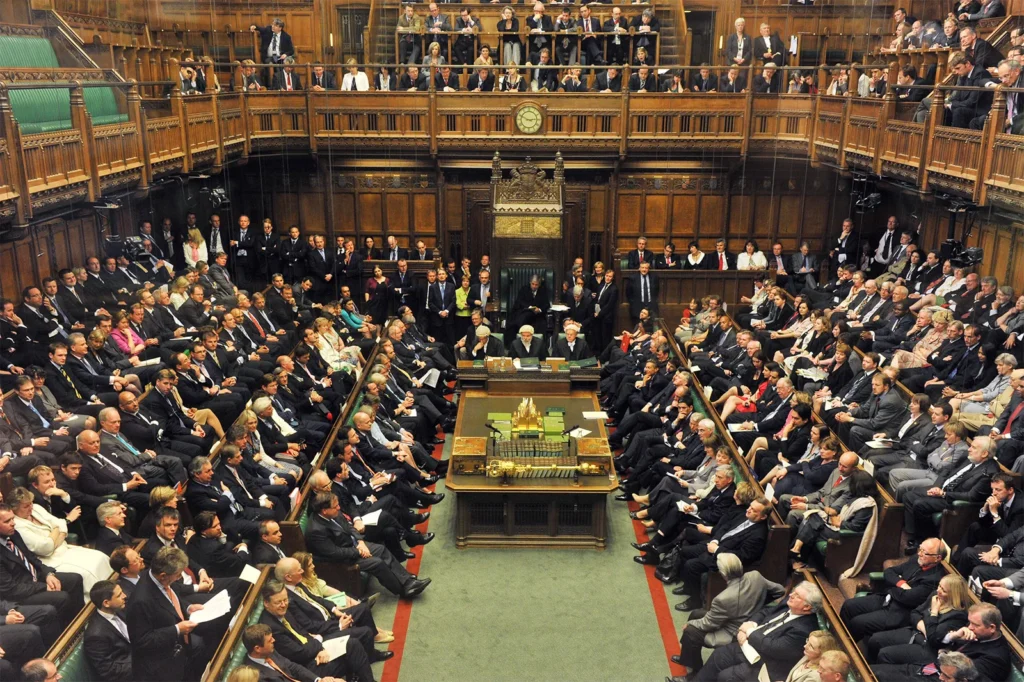
Introduction: Is Urban Planning Really Politics?
There is a comforting fiction in modern government: that planning is a technical craft, separable from the clash of values that fills the debating chamber. On this view, politicians argue about ends — who deserves what, how society should be ordered — while a neutral machinery of rules, plans, and public bodies simply executes whatever the voters have chosen. The machinery, in this telling, is plumbing. The politics is the water.
A UK professor once rejected that view in three words: planning is politics. This article takes the remark not as a conclusion but as a question. Is it true, in what sense, and how far? Urban planning decides where homes, roads, jobs and services go, who pays for them, who gains from the land they stand on, and whose neighbourhood changes. These are questions of distribution, and distribution is the substance of politics. But deciding how something is distributed is not the same as controlling what results. A government can write the rules and still find that what gets built depends on land, money and delivery capacity that it does not command.
The British record is a good place to test the claim. When a party reaches the office of Prime Minister and reshapes the legislative and economic architecture of the state, it is not laying neutral pipework. It is encoding a worldview into permanent structure. The conservative instinct that human beings are fallible and institutions hold accumulated wisdom reaches for restraint, and in its New Right form for markets. The socialist conviction that ordinary people are capable and equality is the essential good reaches for redistribution, public ownership and an activist central state. The liberal faith in rational, self-directing citizens reaches for participation, dispersed power and constitutional reform. The same problem produces different plans depending on who holds the pen, because a plan expresses an ideology as well as the facts.
The article examines three traditions that have supplied British Prime Ministers: the historic Liberal Party, the Labour Party, and the Conservative Party, from 1979 and most closely in the governments of 2010 to 2024. (The modern Liberal Democrats have never held the premiership; their role as coalition partners from 2010 to 2015 is noted where it matters.) The focus is England, since planning is devolved. For each tradition the method is the same. First, recover the ideology. Second, examine the reforms to legislative and economic governance enacted in office, and what they meant for planning. Third, ask three questions of each reform:
- What drove it: a defect the government judged to exist in the system, or a failure that forced its hand?
- Did the expected outcome arrive?
- Was the reform consistent with the ideology of the party that made it?
The defect/failure distinction matters because it exposes where politics sits. A defect-driven reform is proactive: the government has judged something to be wrong by its own lights, and the decision to call something a defect is already an ideological act. A failure-driven reform is reactive: a crisis forces the government to respond under pressure. The first kind reveals what a party wants. The second shows what it does when ideology meets events.
The evidence will not support a simple answer. Three patterns recur in the record. Reforms are often reopened by the next government before they have had time to show results, because the effects of planning take years to arrive, longer than a Parliament. Some questions, above all who owns and prepares land and who pays, recur across every government because every answer favours some interests over others. And outcomes depend on links in the chain from decision to delivery that no party fully controls. The article therefore asks how far planning is politics: politics decides the rules and the definition of the problem, but what gets built is settled by more than politics.
Three Ideological Traditions
Before turning to the record of government, it is worth setting the three worldviews side by side, because the contrasts between them are what make the later reforms legible.
Conservatism begins from human imperfection. Its core idea is the defence of a limited politics grounded in the conviction that human beings are deeply fallible — a theme its thinkers have expressed through original sin, Freudian drives, and more recently “selfish genes”. Society is not a machine to be redesigned but an organic, living body: complex, interconnected, grown rather than built, and not to be rebuilt from first principles. Change is viewed with suspicion; the conservative prefers to adapt proven institutions — Parliament, the common law, the Crown, property — because they embody accumulated wisdom that no single generation is clever enough to reinvent. Equality implies the retention of hierarchy. The state is limited, custodial and paternalistic. Property is strongly defended, though it carries obligations. Its key values are tradition, hierarchy, property and scepticism; its characteristic figures run from Disraeli and Coleridge through Quintin Hogg and Macmillan.
From the late 1970s a second strand joined these traditional principles: the New Right. It combines two ideas that do not naturally sit together. Neoliberalism holds that markets allocate resources better than governments, and so favours low taxes, deregulation, privatisation and individual choice. Neoconservatism holds that society needs authority, order and national identity, and so favours a strong state in matters of law, order and security. Andrew Gamble summed up the combination as the free economy and the strong state. The New Right differs from the older principles in being deliberately ideological: where traditionalism distrusts grand redesign, it set out to remake the economy on principle, and markets can dissolve the customs and communities that organicism wants to protect. It also turns the defence of property into a programme, with the spread of home ownership as a political project. The tension between the older and the newer strand runs through the Conservative record and explains many of its apparent inconsistencies.
British socialism, the tradition Labour carries into Parliament, begins from the opposite end. Its core idea is the pursuit of equality through socially owned industry and shared wealth. Society is a community to be made more equal, though the movement has always been divided over how. Change is sought through persuasion rather than revolution. Human nature is read optimistically: ordinary people are capable, to a degree that varies across its strands (Christian, ethical, scientific, popular, labourist). Equality is the sine qua non, even if its meaning has been endlessly disputed. In Labour’s dominant tradition the state is activist and central. Property, on the founding Owenite view, should be socially owned, and how far to take that principle has been the movement’s deepest fault line. Its key values are equality, fellowship and cooperation.
Liberalism begins from liberty. Its core idea is the protection of civil liberties through the constitution. Society is a community of individuals who should participate in the decisions that affect them. The liberal is marked by a constant concern with constitutional reform, reform as a permanent orientation rather than an emergency. Human nature is basically rational: people can become self-directing citizens. The liberal is less interested in equality than in participation and liberty, and the role of the state is to decentralise, through devolution and strong local government. On property the tradition is pragmatic, judging each case on its merits. It is the one tradition that rejects the left–right spectrum, preferring a libertarian–authoritarian axis, and the only one to advocate devolution as a good in itself.
Each tradition also brings its own answer to the questions that planning must settle. For the conservative, land is property: planning must respect the owner’s rights and the character of established places. For the socialist, the value that planning creates is a common product and should be shared, and the state may plan, own and build. For the liberal, planning is a question of participation: who is entitled to a voice, and how power over places can be spread. These answers differ, which is why planning means different things in different hands.
Liberalism in Power: Building the Scaffolding
The historic Liberal Party governed Britain from the mid-nineteenth century until 1922, and in that span it did more to construct the modern machinery of the British state than any other tradition. The record divides into two phases, and the division is itself a lesson in how ideology adapts to circumstance.
The Gladstonian phase was governance by restraint and accountability. Its reforms were almost all defect-driven: they built institutions that did not yet exist to fix structural gaps in the Victorian state. The Secret Ballot Act of 1872 attacked open voting, which had enabled intimidation and bribery. The Northcote–Trevelyan reforms replaced patronage with appointment by open competitive examination. The Third Reform Act of 1884 and the Redistribution Act of 1885 widened the franchise and rationalised constituencies. Beneath all of it lay Gladstone’s reconstruction of public finance: Treasury control over departmental spending, the Public Accounts Committee, the Comptroller and Auditor General. Each delivered what it promised, and each endures.
The Edwardian phase, under Campbell-Bannerman and Asquith with Lloyd George at the Treasury, reversed the economics while keeping the principle. The “new Liberal” strand held that the state must act to protect individual freedom. The Old-Age Pensions Act of 1908, the Trade Boards Act of 1909, the labour exchanges and the National Insurance Act of 1911 were defect-fixes, and all delivered. The People’s Budget of 1909 introduced progressive taxation, including taxes on land values, to fund welfare and naval rearmament. It also shows the failure side of the ledger: the Lords’ rejection of the budget produced a constitutional crisis, resolved by the Parliament Act of 1911, a failure-driven reform that established the supremacy of the elected Commons. The Representation of the People Act of 1918 then roughly tripled the electorate.
Planning arrived in the same period, and met at once the problems that would trouble every later planner. The Housing, Town Planning, &c. Act of 1909 gave local authorities their first statutory powers to prepare town planning schemes, but its practical effect was limited. The Housing and Town Planning Act of 1919, the Addison Act, committed the state to subsidised council housing, and the programme was curtailed in 1921 by the “Geddes Axe” spending cuts. The land value taxes of 1909 were repealed in 1920. The one instrument that touched the value of land did not survive a decade, and the housing programme gave way when money ran short.
The Liberal record was consistent with its core ideology where it counted most: civil liberties, the franchise, the constitution and rational public administration. The turn from Manchester economics to an active, redistributive state shifted strand but kept the aim of freeing individuals to become self-directing. Where it fell short was decentralisation, the one distinctly Liberal commitment: Home Rule for Ireland was passed in 1914 and then suspended on the outbreak of war.
The through-line is that liberalism in power was a builder. Its plans created free elections, a professional civil service, honest public accounts, pensions, social insurance, wage floors and the supremacy of the elected chamber, and that scaffolding overwhelmingly delivered and still stands. This is partly a feature of the historical moment: a tradition that reaches power when the institutions it believes in do not yet exist builds them from scratch, and building meets less resistance than reforming an entrenched settlement. Its planning, by contrast, which depended on land and money, was the part that was cut back or repealed.
Socialism in Power: Extending and Completing the Scaffolding
Labour, the parliamentary expression of British socialism, extended and completed the scaffolding the Liberals began. Its defining commitments, equality as the essential good and an activist central state as its instrument, are visible in every Labour government, and so is the movement’s deepest argument over how far to take social ownership. The record alternates between proactive, defect-driven redesign and reactive, failure-driven crisis management, and the gap between the two is where much of the ideology’s disappointment lives.
The Attlee government of 1945–51 is the purest expression of the socialist plan. The Parliament Act of 1949 extended the Liberal lineage of 1911 by cutting the Lords’ delaying power from roughly two years to one; it was defect-driven and it worked. The nationalisation of the Bank of England, coal, rail, steel and the utilities was social ownership enacted on an industrial scale, with mixed outcomes: several industries later became bywords for inefficiency and were privatised. The welfare state and the NHS delivered their promised security and endure.
Planning was central to the Attlee settlement. The wartime plans prepared by Abercrombie for London became a programme: the New Towns Act of 1946 created development corporations to build new towns, and the Town and Country Planning Act of 1947 nationalised development rights, required local development plans and introduced a development charge to capture the rise in land value that planning permission creates. The new towns, with land acquired by the corporations and state-backed funding, delivered at scale. The development charge, by contrast, was dismantled by the Conservative government in 1953.
The Wilson and Callaghan years exposed the failure-driven side. The National Plan of 1965 was an ambitious, defect-driven attempt at indicative planning to cure slow growth, and it collapsed after the 1966 sterling crisis and the 1967 devaluation. In 1976 a sterling crisis forced Callaghan to seek an IMF loan on conditions of spending cuts, and his conference admission that a government could no longer spend its way out of a recession marked the end of the postwar Keynesian consensus from within the party that had done most to build it. In land policy the same pattern repeated: the Land Commission of 1967, with a betterment levy and powers to acquire land, was repealed in 1971, and the Community Land Act of 1975, under which local authorities were to acquire land needed for development, was repealed in 1980.
The Blair–Brown governments of 1997–2010 were the tradition’s most far-reaching since Attlee, but a planning transformed by the chastening of the 1970s. On legislative governance the programme was almost entirely proactive: the House of Lords Act of 1999, devolution to Scotland, Wales and Northern Ireland, the Human Rights Act of 1998, the Freedom of Information Act of 2000 and the Constitutional Reform Act of 2005. On economic governance the signature move was the opposite of Attlee’s: Brown handed interest rates to an independent Bank of England in 1998 and bound the Treasury with fiscal rules, a socialist government tying its own hands in the name of market confidence. In planning, the government created Regional Development Agencies in 1998–99, strengthened regional spatial strategies, pursued an urban renaissance with a target of 60 per cent of new housing on previously developed land, and reformed the system through the Planning and Compulsory Purchase Act of 2004. When the Barker Review of 2004 argued for more housing supply, the government proposed a planning-gain supplement to capture part of the land value uplift, then dropped it in 2007 in favour of the Community Infrastructure Levy. Net additions to the housing stock in England rose from 132,000 in 2000–01 to a peak of 223,530 in 2007–08, then fell by 18 and 21 per cent over the next two years as the financial crisis arrived. The rise coincided with a credit boom, and the government’s own measures cannot be separated from it.
The Starmer government returned to office in July 2024 with a stronger national push to build. It restored mandatory local housing targets, backed brownfield-first development, opened a route to review lower-quality Green Belt land (the “grey belt”) and secured the Planning and Infrastructure Act, which received Royal Assent in December 2025 and provides for strategic planning across several local authorities. Its target of 1.5 million homes in England in the Parliament requires about 300,000 a year. In the twelve months to June 2026 about 203,000 were delivered, and the Housing Secretary has described the target as a stretch. The change of Prime Minister in 2026 leaves the outcomes of this period provisional.
On the test of consistency, Labour has been steady in its ends and shifting in its means. Curbing hereditary privilege, widening access to welfare and housing, and claiming for the public a share of the value that planning creates are all consistent with its egalitarian roots. The move from social ownership to delegation to independent institutions departed from the tradition, though it can be read as consistent with the Fabian trust in expert bodies, and Labour’s own abandonment of the planning-gain supplement in 2007 departed from its land tradition. The through-line is a recurring gap between mechanism and ambition. The institution nearly always gets built, but the larger hope attached to it often falls short: Lords reform stalls at its first stage, devolution strengthens rather than dissolves nationalism, and fiscal rules are suspended when a crisis hits. The party that nationalised the Bank of England in 1946 set it free in 1998. That is not a betrayal of the ideology so much as a demonstration of the article’s question in miniature: the plan is where the ideology meets the world, and the world pushes back.
Conservatism in Power: Contesting and Re-routing the Scaffolding
The Conservative governments offer the richest test of the thesis, because the party carries two strands that pull in different directions. The traditional conservative distrusts grand redesign and defends inherited institutions. The New Right set out to remake the economy on principle. The record shows both, and shows how a tradition that reveres institutions can produce restless change.
Thatcher and Major, 1979–97. In planning the New Right was a programme of releasing land and property to the market while using the strong state to clear the way. The Housing Act of 1980 gave council tenants the Right to Buy, the property-owning democracy turned into policy; it was defect-driven and it delivered on ownership, but council house building collapsed and the stock sold was not replaced at scale, so the outcome for those in housing need ran the other way. The Community Land Act was repealed in 1980 and the Development Land Tax abolished in 1985, returning to the owner the value that planning permission creates. Enterprise Zones, announced in 1980, and Urban Development Corporations, created from 1981 including the London Docklands Development Corporation, took planning powers from local authorities, assembled land and funded infrastructure to attract private investment. They produced visible regeneration in Docklands, though critics questioned the social outcomes. National guidance in the mid-1980s leaned towards a presumption in favour of development. Then the Planning and Compensation Act of 1991 strengthened the development plan as the basis for decisions, a return to the plan-led system that sits closer to the organic, institution-respecting strand than to the market one. The New Right is consistent with this record in its ends: markets, ownership and a strong state that clears obstacles. The 1991 Act shows the older strand reasserting itself.
2010–2024. The scholarly literature describes a reforming spirit that touched almost every corner of the constitution, but reform of a particular kind: changes framed as restoring sovereignty and control that in practice shifted power towards the executive and shielded it from scrutiny. English Votes for English Laws, introduced in 2015, was a defect-fix aimed at the West Lothian anomaly; its expected outcome, a meaningful English voice at Westminster, never arrived, and it was abolished in 2021. The Fixed-term Parliaments Act of 2011, a coalition measure, attacked the Prime Minister’s power to time elections for advantage, was circumvented in 2017 and 2019, and was repealed in 2022. The European Union (Withdrawal) Act of 2018 was framed as the reassertion of parliamentary sovereignty, yet most scholars judge that its delegated powers reasserted Whitehall’s control over Westminster. The campaign to rein in judicial review after the Miller litigation largely succeeded mechanically, at the cost, in the view of the Joint Committee on Human Rights, of denying effective remedies.
In economic governance the Office for Budget Responsibility, created in 2010, was a genuine defect-fix that stuck, so firmly that Labour later built its fiscal lock upon it. But the headline ambitions mostly did not arrive. Austerity and welfare reform, failure-driven responses to the post-2008 debt surge, cut the deficit slowly and at a heavy social cost, hollowing out local-state capacity. Levelling up foundered for want of money and local delivery capacity. The promised Singapore on Thames was reversed as corporation tax rose again, and the pursuit of regulatory autonomy left the City with less access to EU markets than Singapore or the United States.
Planning followed the same pattern. The coalition abolished the Regional Development Agencies and regional spatial strategies, with the Localism Act of 2011 introducing neighbourhood plans, in force from April 2012. The National Planning Policy Framework of 2012 set a presumption in favour of sustainable development, the New Homes Bonus rewarded councils for housing growth, Help to Buy supported demand from 2013, and permitted development rights eased the conversion of offices to homes. Meanwhile austerity cut the capacity of local planning departments. A housing delivery test followed in 2018, the Levelling Up and Regeneration Act in 2023, and in 2022 and 2023 mandatory local housing targets were turned into advisory ones after a backbench revolt. The Growth Plan of September 2022 added Investment Zones with relaxed planning rules. On the numbers, net additions to the housing stock fell to a trough of 130,610 in 2012–13, then climbed to 248,590 in 2019–20, the highest in the series since 1991–92, without ever reaching 300,000. Whether that recovery came from the policies or from the end of the post-crash downturn cannot be separated on this evidence.
The consistency test is revealing. Neighbourhood plans fit the organic strand and the defence of community; abolishing the regional tier fits the limited state of the New Right. But the push for housing through a national presumption and permitted development overrode local discretion, in tension with the same localism. Levelling up, with its state intervention, fits neither strand. And the Truss–Kwarteng mini-budget of September 2022 crystallises the argument. It was driven not by a defect or by an external failure but by ideology in its most undiluted form: unfunded tax cuts financed by more than £70 billion of new borrowing, presented without an OBR forecast and without evaluation against the fiscal rules, in effect bypassing the credibility machinery the Conservatives themselves had built in 2010. The outcome was the opposite of the one intended: sterling at record lows, gilt yields spiking at a pace unseen since 1988, a pension-fund liquidity crisis, the Bank of England forced to act as market-maker of last resort, and the Prime Minister gone within weeks. It showed that a plan is not a wish and that markets adjudicate ideology as ruthlessly as any electorate.
The through-line is a paradox the literature returns to again and again. A tradition that reveres institutions and distrusts rationalist redesign produced a decade of restless constitutional and planning change whose mechanisms often succeeded but whose stated justifications mostly failed. If the Liberals built the scaffolding and Labour extended it, the Conservatives, especially in the recent period, contested and re-routed it, bending the existing structure towards the executive while telling a story about restoration.
Comparative Discussion: What the Plans Reveal
Set the three records side by side and the question the article began with can be answered with evidence rather than slogans. Five findings stand out.
First, the cause of a reform is itself an ideological claim. The Liberal record is overwhelmingly defect-driven in the strongest sense: a tradition that reached power when the modern state did not yet exist got to build it. The Labour record alternates between defect-driven redesign (the welfare state, the minimum wage, the 1947 planning system) and failure-driven crisis management (1967, 1976, 2008). The Conservative record is the most revealing, because its reforms are usually defect-fixes as the government framed them — judicial overreach, loss of control to Brussels, an over-bureaucratic planning system — and those framings are precisely what the scholarship contests. One party’s defect is another’s cherished institution. The decision to call something broken is where the politics begins.
Second, the parties were consistent in their ends more than in their means.
| Party | Consistent with ideology | Departed from it | What explains the departure |
| Liberal (historic) | Secret ballot, franchise, civil service by merit, supremacy of the Commons | Active welfare state against Gladstonian economics; no lasting devolution | A change of strand from Manchester to new Liberalism, and war |
| Labour | Curbing hereditary privilege, nationalisation, welfare, claiming land value for the public | Independent Bank and fiscal rules; dropping the planning-gain supplement in 2007 | Crises (1976, 2008), and the Fabian trust in expert bodies |
| Conservative | Right to Buy, enterprise zones, austerity, low corporation tax, neighbourhood plans | Brexit-era constitutional engineering; levelling up; the 2022 mini-budget | The clash between the traditional and New Right strands, and the Brexit shock |
The pattern is clear: proactive, defect-driven reforms are the most consistent with ideology, and failure-driven ones are where parties drift from their principles.
Third, the apparent ranking of success needs care. On the face of it Liberalism has the highest hit rate, because almost everything it built stuck. Labour shows a persistent gap between mechanism and ambition. The recent Conservative period has the weakest hit rate on its own stated aims. But the ranking tracks the historical situation of each tradition more than its ideology: building new institutions disappoints least, extending a settlement disappoints moderately, and contesting an entrenched settlement while promising transformation disappoints most. It also reflects survivorship, since what lasted is what is remembered, and the sources differ in character, the Liberal record being settled history and the Conservative record the product of critical scholarship written close to events.
Fourth, politics controls the first link of a long chain. A planning decision becomes a home only after a series of steps: national policy and law, the local plan and site allocation, land and the owner’s willingness to release it, planning permission and the negotiation of contributions, infrastructure, finance and the developer’s decision to build, construction, and sale. A government controls the first of these. The rest sit with councils, landowners, developers, lenders, utilities and buyers. The statistics fit this picture. Net additional dwellings in England, 1991–92 to 2024–25, stayed between 130,610 and 248,590 under every party, and never reached 300,000.
| Period | Government | Average net additions a year |
| 1991–97 | Major (Conservative) | 158,500 |
| 1997–2010 | Labour | 170,500 |
| 2010–15 | Coalition | 145,600 |
| 2015–24 | Conservative | 227,900 |
| 2024–25 | Labour (one partial year) | 208,600 |
At the three changes of government in the series (1997, 2010, 2024) supply moved by +1%, −5% and −6% in the first year, after a fall in the year before each change: no step up or down. The largest swings follow shocks, not parties: falls of 18% and 21% in 2008–09 and 2009–10 with the financial crisis, and 12% in 2020–21 with the pandemic. The two long climbs, to 2007–08 and to 2019–20, each ran through a cycle upswing, so policy and cycle cannot be separated. And because homes take years to deliver, completions in a government’s early years come mostly from sites permitted under its predecessor. Credit and blame are therefore misplaced, and reforms are judged, and reopened, before their results arrive. The Regional Development Agencies, created in 1998–99 and abolished by 2012, are an example; strategic planning across several authorities has returned in the Planning and Infrastructure Act of 2025.
Fifth, land and funding are the question every government must answer, and each answers it differently. Planning permission changes the value of land, and who captures that gain, the owner, the developer, the community or the state, is where the ideologies set out earlier collide: property rights and the limited state against the common ownership of value. The history is a sequence of instruments introduced by one party and removed by another.
| Land-value instrument | Introduced by | Removed or replaced |
| 1947 development charge | Labour | Abolished by the Conservatives, 1953 |
| 1967 Land Commission | Labour | Repealed, 1971 |
| 1975 Community Land Act; 1976 Development Land Tax | Labour | Repealed 1980; abolished 1985 |
| 2005 planning-gain supplement | Labour | Dropped 2007; Community Infrastructure Levy, 2008 |
In constitutional reform the baton is passed: the Parliament Act of 1911 leads to that of 1949, and the work on the hereditary peers is completed in 2026. In land policy it is dropped, each government dismantling the instrument of the last. Funding is not a complete answer either. The Public Accounts Committee reports that £10.5 billion has gone since 2016–17 to programmes meant to unlock land for around 713,000 homes, yet just over 33,000 had been built on that land by September 2025. Land and funding appear to be necessary conditions, not sufficient ones: where the state acquired land and funded it directly, as in the new towns, delivery at scale followed, while public money without the rest of the chain has disappointed.
A related matter is who builds for need. Housing need in England is surveyed and well documented: about 1.34 million households were on social housing waiting lists in 2025, only 12,198 social rent homes were delivered in 2024–25, and a record 135,580 households were in temporary accommodation in March 2026. A private builder builds for those who can pay a price covering land, construction and margin, and need is not the same as effective demand. Whether need is met by the state, by the market or by a mix is a political choice, and it is where the three traditions diverge in practice: Labour’s public provision, the Conservative property-owning democracy and Right to Buy, and the Liberal emphasis on community and local control.
There is a final image in the record: the relay. The Parliament Act lineage runs from the Liberals in 1911 to Labour in 1949, and the welfare state from the Liberal pensions and national insurance of 1908–11 to Labour’s full edifice after 1945. Planning began with the Liberal Act of 1909, was built into a system by Labour in 1947, and was loosened and redirected by the Conservatives in the decades after. Each ideology hands the structure of the state to the next, sometimes extending it, sometimes fighting over its direction, but never merely administering it.
Conclusion: How Far Is Planning Politics?
The comforting fiction with which this article began, that planning is plumbing and politics is water, does not survive contact with the British record. Every major reform of legislative, economic and planning governance over the last century and a half carries the signature of the ideology that enacted it. The Liberal faith in rational citizens and dispersed power built free elections, an honest Treasury and the supremacy of the Commons. The socialist conviction that equality is the essential good and the central state its instrument built the welfare state and the 1947 planning system, and then, humbled by crisis, handed economic management to independent institutions. The conservative tradition, in its New Right and traditional forms, released land and property to the market, then in the recent period bent power towards the executive while promising restoration.
But the fiction’s opposite does not survive either, at least not in full. Planning is politics in three senses that the evidence supports. Politics decides what counts as a defect. It decides the instruments, above all who captures the value that planning creates from land. And it decides the direction of power between centre and locality. Planning is not only politics, however. What gets built depends on links in the chain that no party controls: the owner who will not sell, the developer who builds at the pace the market will absorb, the lender, the utility, the council short of planners. The largest movements in housing supply followed the financial crisis and the pandemic more than they followed changes of government, and the same institutions have been kept by parties that opposed their creation. The qualified answer is that politics sets the rules and frames the problem, while delivery is settled by land, money, markets and time.
The record also explains why governments keep re-legislating. They control the first link in the chain and are judged on the last. Reforms are reopened before results arrive, instruments are dismantled by the next government, and the question of land and funding returns in every generation because every answer favours someone. That is what it means to say that planning is politics in practice. A government does not simply execute a mandate: it translates a worldview into mechanisms, and the act of translation, what to call a defect, what to leave alone, where to put power, who should gain from land, is the most consequential politics it will conduct, because it outlasts the government that performed it. Governments come and go in the span of a Parliament. Their plans are how they stay, though what stays is not always what they planned.
[…] It was not a reaction to poor economic performance across the UK. If it had been, England would have demanded devolution too. Instead, the North East of England rejected an elected regional assembly in 2004. The grievance was about consent and legitimacy: nations governed by a party they had rejected. Ideology added to it. Deindustrialisation, privatisation and free-market reform clashed with a more collectivist political culture in Scotland and Wales. For more on how party ideology shaped planning and reform, read Politics of Urban Planning: Ideologies, Reforms and Outcomes — The UK Parties Case. […]