Urban planning books are essential for planners in practice. Especially when its focuses-on practice matters. I present these books here with some of them detailed review for the benefit of urban planners.
A reader in planning theory
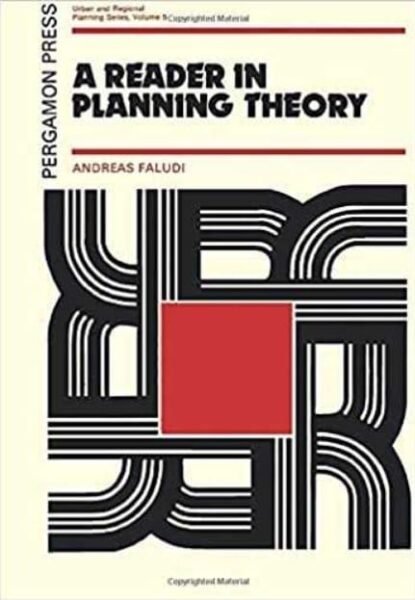
The first book on the list comes A Reader in Planning Theory. The book combines the main subjects of planning theory with the planning systems in the UK, USA, and Germany. Also, he reviews the application of theories, methods, and approaches in decision making of plan making and the planning process.
The author shows the failures and defects of applying theory in the planning systems and identifies the problem that led to failure. Andreas, in deep review based on his experience as a practitioner and professor, provides solutions to the defects pointed out in the book. In this way, he raises the practitioner’s knowledge and experience about practice problems to serve him in his career. You can read a full book review on my website.
The process of economic development
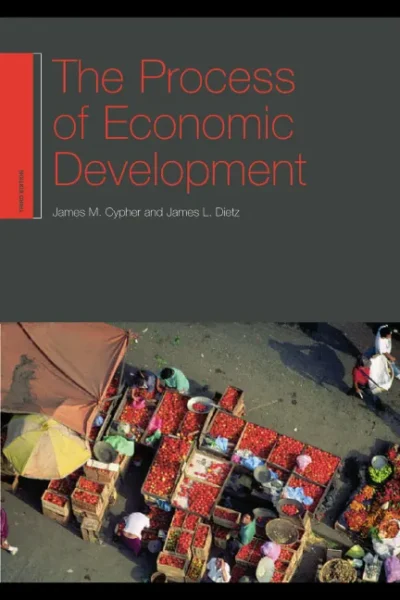
Though urban planning relies on specialists in the field of economic development, and this book does not present the max benefit, it covers all key elements. The Process of Economic Development is a book about practice and provides themes, concepts, and ideas to students with undergraduate degrees in geography, economics, and politics.
The book presents overwhelming information on economic ideas chopped from other countries in Asia, Africa, the Middle East, and Latin America applied successfully to improve a country’s economic defects. These ideas are presented for educational purposes, and the related person might use them in practice if it fits the country context. You can read a full book review on my website.
Real estate investment and financial strategy
Many planners do real estate studies when building a local plan or development plan. This book highlights, within the USA context, the key strategies and procedures for real estate work. Real Estate Investment and Financial Strategy is a book that includes academic knowledge about the financial system of the US. It includes a detailed knowledge of the real estate system and the methods of work.
The book also includes all the related laws, regulations, and rules of the US real estate. It provides many ideas from research in the US that researchers, whether individuals or companies, private or public, have applied in the real estate market that reduce the risk of investment to protect the lender and the borrower. The book is about the US systems of finance and real estate, and the knowledge from the side of the lender, not the developer, as the latter work involves many specialties that create risk for the real estate investment in real-world urban development. You can read a full book review on my website.
The urban process: cities in industrial societies
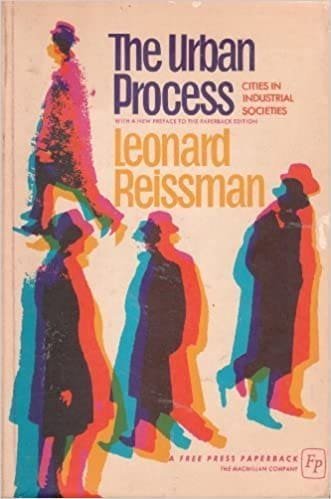
The Urban Process is one of the best urban planning books for planners. Leonard has connected the main theme of the book and its content brilliantly. Starting from what has been achieved in urban studies, followed by defining the four main players in creating our urban world and their characteristics and roles, what is the scope of urban theory before one should proceed to study the societies and cities?
And finally, the industrial cities and the four elements to study it before introducing his new typology of study and how he developed it to study the urbanization of cities. Every chapter of this book carries to date relevant ideas and concepts that a researcher could apply and use in research and as a practitioner in his daily work. The author made the book very interesting to read as every page includes a name, a study, and research that a reader can go further from it for detailed knowledge about the subject of discussion. You can read a full book review on my website.
Urban land use planning – urban planning books
One of the urban planning books that gives urban planners an approach to shape city growth. Also, it benefits them in four keyways.
- Complete framework for sustainability: It teaches planners how to balance the “Three Es”—Economy, Environment, and Equity—ensuring that growth is economically viable, ecologically sound, and socially just.
- Planning software (PSS): The book provides technical guidance on using modern tools like GIS and digital media to track current trends, assess future conditions, and evaluate the impact of different policy choices before they are implemented.
- Stakeholder resolution: It offers proven models for navigating the “planning arena,” helping planners understand and manage the often-conflicting priorities of government, developers, and the public.
- Step-By-Step Method: Planners use the book’s specific 5-task process to manage growth effectively:
- Determining location requirements.
- Mapping land suitability.
- Estimating space needs.
- Analysing holding capacity.
- Designing alternative land arrangements.
Handbook of transport modelling
An urban planning book that covers academic research as well as high-level professional practice to simulate and predict the movement of people and goods. While Kaiser’s book focuses on land use policy, this handbook focuses on the technical “how-to” of modeling the systems that support those lands. Two fields benefit from this book:
- Urban Planners: Benefit from advanced demand forecasting methods, such as activity-based modeling and discrete choice analysis, to predict how new developments will impact traffic flow and public transport demand.
- Civil & Transportation Engineers: Gain technical rigor for designing infrastructure, specializing in national traffic forecasting, urban freight movement, and Intelligent Transport System (ITS) innovations.
- Logistics Managers: Use the specific models for freight planning and logistics to optimize the movement of commodities through urban networks.
The book focuses on three key pillars.
- Modelling: Detailed breakdowns of the traditional Four-Step Model (trip generation, distribution, mode choice, and assignment).
- Latest innovations: Expanded coverage of emerging trends, including GIS for transport, environmental impact modeling (emissions/noise), and the valuation of travel-time savings.
- Policy building: Demonstrates how models drive critical decisions like congestion pricing, infrastructure funding, and sustainable urban development.
Evaluation in the planning process
Though this book was published in the late 1975 but still one of the best urban planning books. Here, the author provides urban planners with a framework for the rationalization and transparency of decision-making. In addition, he shows the benefits of using the Planning Balance Sheet (PBS). Here, the planners plan beyond economic forecasts to discover real world social impacts of their planning.
Key benefits for urban planners:
- Identifies Winners and Losers: The PBS explicitly identifies which community groups benefit from a project and which are disadvantaged. This allows planners to design compensation measures or adjust policies to protect vulnerable populations.
- Facilitates Public Participation: By making complex technical data comprehensible and transparent, the framework helps bridge the gap between abstract planning and public involvement.
- Continuous Improvement: Ongoing evaluation (both before and after implementation) identifies the strong points of a plan and highlights problems, ensuring that planning practice evolves based on analytical evidence rather than guesswork.
- Resource Allocation: It provides a structured way to justify resource allocation and policy choices, which is critical in tight fiscal environments where planners must prove the value of every public pound spent.
- Multi-Dimensional Analysis: Planners can evaluate proposals using a mix of monetary, physical measurement units (e.g., noise levels), or descriptive terms, allowing for a more holistic assessment than traditional cost-benefit analysis.