The article (Innovation in architecture) provides an analysis that with the growth of formal architectural education and global competition-based project selection, clear measures are needed to judge architectural innovation. It shows 7 practical criteria to evaluate whether a project is truly innovative, based on practical experience and research and technical analysis of projects worldwide. These include Concept design: The concept fits the site context (history, heritage, topography, environment, aesthetics) and supports function while reducing cost/time impacts. New method: Innovation can appear in the design process itself through new tools, workflows, and techniques for generating concepts. New material: Using newly developed materials (or improving traditional ones) can enable new architectural forms and better building performance.
Structure: Innovative structural solutions make complex architectural forms stable, feasible, organized, and less costly to build. Project requirements: The design must meet program goals, budget, user comfort (indoor/outdoor), and regulations while improving efficiency and reducing waste. Realization: Innovation includes how well the design is delivered in construction (method, time, budget) and how closely the built result matches the concept. Style relevance: A distinctive style that can be applied across different building types adds to innovation, though highly complex styles may be harder to replicate widely.
According to architectural education measures and ancient historical evidence, few architects practiced architecture. Therefore, individuals in the ancient world practiced architecture came from another background and did not receive formal education. Also, these architects created for themselves names that are still referenced in the architectural literature and practice discussions.
The educational arena and academic absence affected the method and who judges and measures an architectural project’s innovation. Nowadays, thousands of architects in the world graduate every year, and they increase the number of the professional practice workforce. For that, it is essential to create measures to define skilled architects from less skilled ones.
Governmental or private sector bodies in the world announce new projects through competition. As a result, we need to judge ourselves and our work before we judge others. Following, I present the 7 criteria to define innovation in architecture. A study based on a research and technical analysis of several projects in Europe.
The 7 criteria to define innovation in architecture
- The Concept
The concept: it fits the site in terms of context, historical, heritage, topography, aesthetics, and environment.
The concept: Any project starts with a concept, whether it is through a competition or a direct assignment from a client. The project’s architectural design and its fit to the site context represent a major criterion to judge innovation. Architects design projects in harmony with the site’s topography and take full advantage of it. That’s because the harmony reduces the impact on construction cost, construction completion time, and client budget.
The site silhouette gives great opportunities for the architect to change in form and levels, affecting the building’s aesthetic form. Many countries require a response to heritage and historical content. Therefore, designers consider heritage when the area is a historical content area. The project’s architectural design must comply with the environmental requirements and strategies. First, to reduce utilities consumption, reduce travel, increase public transit use, protect land and wildlife habitat. Second, take advantage of external energy like natural light and wind speed and flow, and increase indoor and outdoor human comfort.
Architects’ priorities include aesthetics more than other architectural obligations. Surely any project must comprise a concept that fits the project’s function. Regardless of whether the project design is complex or simple. The project concept is more correlated to the site. For example, designing a museum near a water surface might affect the design. Therefore, it could take the form of a ship.
2. New Method
New method: Design process, the process of generating the concept design, tools, and techniques.
New method: architectural design represents a complex process and includes the involvement of many disciplines. Certainly, structural engineering, mechanical engineering, environmental engineering, visualizers, model makers, architectural designers, and draughting people. Architectural firms in the world still use the conventional methods to produce a concept design. Method of using freehand sketches and turning them into computer drawings later.
Big firms with more specialized people use advanced technology & tools in producing concept design. For example, like starting from doing a 3d model. Then scanning the model to computer software to turn it into architectural drawings. Other firms use software that allows freehand sketching and allows the transfer to other software’s generating accurate architectural drawings.
This process of preparing a concept design is a major criterion for judging the innovation of the architectural project. Many architects in the world introduced new methods to prepare concept designs, and professionals in the field of architecture consider that an extra credit for their innovation in architecture.
3. New Material
New material: the architecture comprises the use of new material
New material: the construction building material market introduces newly discovered materials as a result of technology development and manufacturing. The availability of new materials in the market increases architects’ opportunities for innovation. The opportunity to use these materials to give the building form its real and desired look. Architects and specialists’ study new materials and research their feasibility, stability, and use in construction.
Many architects introduced the use of new materials in building envelopes, such as titanium, and worked on their assembly detailing to make it feasible. Other architects developed an old material used even in ancient history, like mud. Developed its manufacturing to introduce a new material like terracotta, giving the building an attractive and amazing look.
In developed countries in the world, engineers use aluminum as a structural material in small-scale buildings, using a new material represents a criterion of innovation in architecture.
4. Structure
Structure: complexity and stability, simplicity of structural design vs complexity of architectural design.
Structure: structural engineers contribute positively to the architectural design process, as many concepts are fantasia. The structural engineer’s innovation comes to design these fantasia forms and complex forms to make it constructible and less costly. Complex architectural concepts comprise a complicated structural system. Here, the innovation comes to simplify the structural system by making it systematized and organized.
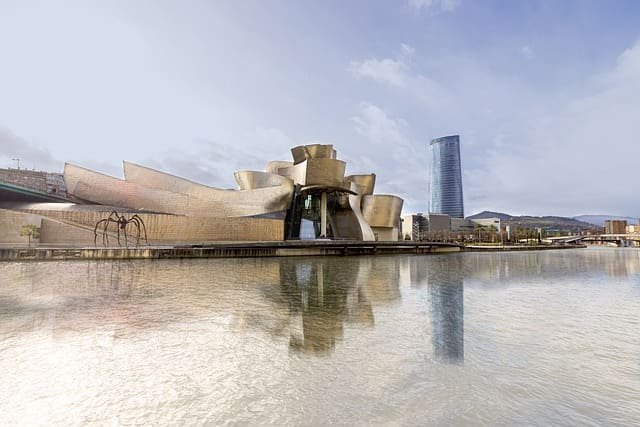
Adding to that, in this process, the structural system must reach a high level of stability. It’s a requirement to get approval for construction and to make it safe for construction and use, regardless of the complexity of the architectural form. Many architects in the world designed very complex architectural designs, like the Bilbao Museum, TWA Airport, and Guggenheim Museum.
The structural team simplified the former project’s designs to a systemized system and organized structure. Structural system response to the complexity of the architectural form of the project to make it stable and feasible represents one criterion of innovation in architecture and design.
5. Project Requirements
Project requirements: project targeted program, construction budget, users’ comfort, indoor and outdoor.
Project requirements: architectural firms succeed in their work when the architectural design complies with the project’s targeted program, construction budget, and design for human indoor and outdoor comfort. Client approval and acceptance of any architectural design mark a priority for any firm in the world.
The project requirements not only to fulfilling the former, but also the country’s rules and regulations and approval process. Architectural design to respond to architectural design principles and to reduce unnecessary components, making the internal design without area waste, and to increase design efficiency. this is one of the major criteria of innovation in architecture.
6. Realization
Realization: the process of realizing the architectural design, its simplicity, construction method, project budget, and construction time.
Realization represents a criterion of innovation in architecture that makes the project real and sensible. It’s the process of transforming the architectural design, its simplicity, construction method, adherence to the client’s construction budget, and the project construction time required to complete it.
Many firms have established internal systems similar to BIM to facilitate the architectural design process from inception to completion. Using simple construction methods or simplified new construction methods adds credit to the architectural design innovation.
Giving the architectural design in reality the same effect and physical appearance as in the concept design phase is a gauge and measure of success for a firm and a sign and criterion of innovation.
7. Style Relevance
Style relevance: the architectural style of the concept design. Is it a new style?
Style relevance: firms in the world participate in the world architectural movement, like the one that happened in the mid-nineties, the modern movement in architecture. The way or method to bring reputation and attract attention to a relevant firm. Architecture firms in the world invented their style of work, besides the above criteria availability.
This criterion adds value to the architectural design as this is not an easy and simple task to reflect in several projects and different types of functions. Reflecting style, for example, in two different functions like a museum project and a hospital design, represents innovative design capability due to the characteristics of these two different projects.
A style that includes general concept characteristics makes it more applicable to different types of functions, like the organic movement in architecture. The style complexity and its link to complicated forms will reduce its chances of succeeding in several types of functions, like the style of the Bilbao Museum.
Innovation in architecture emphasizes the need for clear measures to evaluate architectural projects amid increasing formal education and global competition. The article outlines seven criteria essential for assessing true innovation. First, concept design must harmonize with the site context, addressing historical, aesthetic, and environmental factors. Second, new methods in the design process enhance creativity through advanced tools and techniques. Third, the use of new materials enables unique forms and improved performance. Fourth, innovative structural solutions ensure stability and feasibility. Fifth, meeting project requirements is crucial, including adherence to budgets and user comfort. Sixth, the realization of designs during construction reflects innovation through effective methods and budget alignment. Finally, style relevance showcases an architect’s ability to apply distinctive styles across various projects.