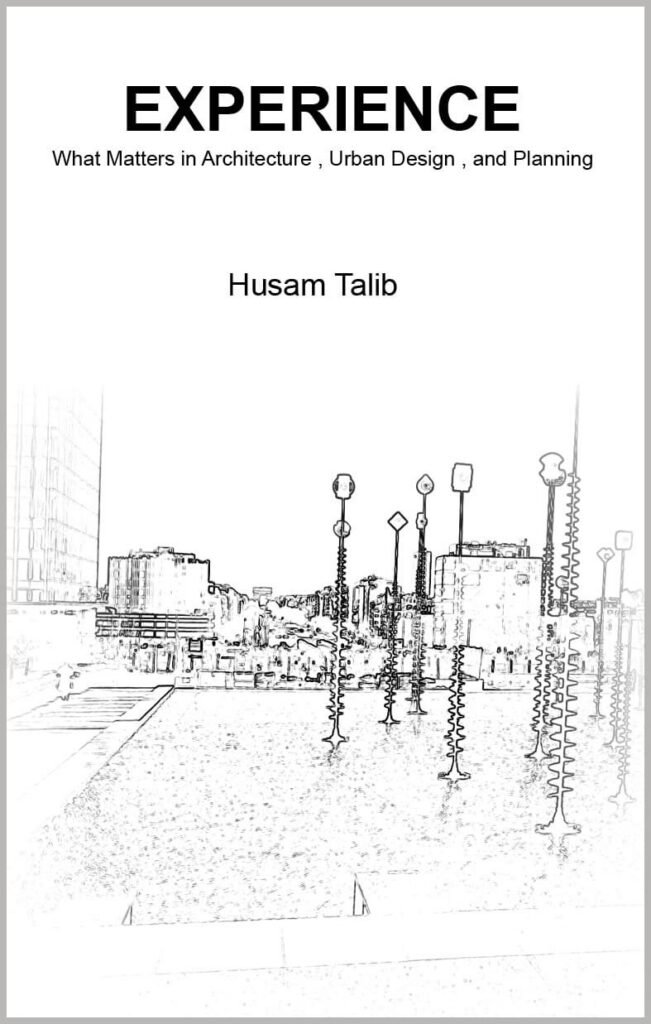
Book Overview and Chapter Summaries
Professional Practice in Architecture, Urban Design, and Planning
About the Book
This book closes the gap between what you learn in school and what you actually face in practice—from technical skills to judgment, resilience, and the reputation you build over time. It delivers everything you need to know: the essential skills, the realities of the workplace, and the paths available after graduation.
After graduation, many architects struggle to choose which direction to take. Drawing from real-world projects I’ve worked on, I walk through the distinct activities within each path an architect might follow—and, more importantly, how to avoid failure and achieve success in every task. It covers many topics related to professional practice like:
- Professional practice career path selection – supervision or design – realistic criteria to consider from daily firm work.
- Types of hard skills and soft skills used in professional practice, and when to use them to gain success.
- What CPD programs are useful for career development in practice, such as PMP, LEED, and BIM.
- Management skills and methods for architects to succeed in architectural practice.
- Building connections and client relations at the beginning of the career to establish a client network for use when establishing one’s own architecture business. Other smart practice-based ways to get jobs for the business.
- Integrating with other firm disciplines and increasing knowledge gradually, such as MEP, and providing useful references to use in the firm’s daily work.
Within these pages, I reveal what many architects and firms around the world consider precious: the kind of hard-won experience you rarely find in a book, seminar, or professional course—experience that actually serves you in day-to-day practice.
A grounded guide to the realities of architectural practice—and to building a career that lasts.
Chapter Summaries
Chapter One: Career Start, Selecting the Path
This chapter guides students and new graduates in choosing a route in architecture, urban design, or planning. It begins with the capabilities the professions demand (art, drawing, perception of scale and light), the range of job fields, and how licensing differs between the USA, the UK, and the Middle East. It then follows the author’s own trainee years to compare the design route with the supervision and construction route. Each route comes with its own criteria: skills, knowledge, development, judgment, and cooperation for design; process, codes and standards, risk assessment, workflow, building systems, and job role for supervision. The central advice is to assess a route against your career goals and keep a recovery plan if you need to switch.
Chapter Two: Design Process, Doing Design
This chapter explains how education shapes the way architects design. One school treats architecture as pure art with freedom of form, and the other treats it as a multidisciplinary engineering process that considers structure early. It defines architecture, urban design, and urban planning, and shows how their education and practice differ between regions. It then walks through the five real-world design stages (inception, project brief, concept design, design development, building permit) and compares them with the RIBA and AIA frameworks. It closes on the constraints that shape the process: fees and budget, coordination between disciplines (the multi-country hospital is the example), and the land ownership and funding that decide whether urban plans get built.
Chapter Three: The Design Process, the Drivers of Change
This chapter explains why designs change, drawing on real projects from the author’s practice. For medium-scale buildings, the drivers are the architect’s psychology and skill, time and management failures, client demands, cost limits, contractual surprises, authority intervention, and conflicts of interest. For large urban developments, it shows how market research, land ownership, and funding secure or sink a project. The Legends master plan, where the 2008 crisis halted the work, is the main case. The chapter also covers investor withdrawal, the choice of design firm, and shifting market conditions.
Chapter Four: Securing Success in Design
This chapter sets out the determinants of success in professional practice. It covers choosing a firm and getting hired, aligning your work with career goals (with friends’ routes to starting their own firms as examples), and communication skills and cooperation with management. It also covers productivity and quality through standards, drafting, consistency, coordination, and scheduling, and management qualities such as respect and reliability. It ends on the knowledge gaps that cause failure (design, management, planning) and the need for continuous training, such as new software and green-building certification.
Chapter Six: Construction, Turning Design into Reality
This chapter describes the designer’s role on the contractor’s side, where the work is mostly execution, coordination, and shop drawings rather than design. It shows how material manufacturing limits, submittals, and change orders (under FIDIC) can force design changes, and how poor coordination or documentation causes costly failures. It lists the main causes of construction risk, stresses the need for MEP and civil knowledge, and advises spending a limited period in this route. It ends with a worked example of estimating the time, labor, material, and cost of a pad foundation to build planning and pricing experience.
Chapter Seven: Establishing a Business in the Middle East
This chapter sets out the path from employee to practice owner in the Gulf. It covers the licensing, sponsorship, staffing, and authority-approval requirements, with a note on the post-2018 and post-2021 policy changes. Most of the chapter is practical advice on winning work: building client relationships while employed, registering with public bodies, and using contractors, real estate companies, PROs, sponsors, and business development managers. It also looks at how clients choose consultants and lists the main causes of consultancy failure.
. Book is available on Amazon platform for full details you can find on book page.
Enjoyed this article? Our author book Experience: What Matters in Architecture, Urban Design and Planning shares his experience in professional practice. Read about the book or find it on Amazon.
I bought from amazon
This book is a unique reference for architects and engineers looking for professional practice knowledge specifically in the Middle East. It is rich in detail, clear in explanation, and very well illustrated. Highly recommended