Architects in the world are proceeding for the PMP certificate after a short time of work experience. The PMP certificate mainly serves professionals who work on the site and projects are under their direct control and responsibility. A firm requires that a professional have this license. Surely, because the firms demand it as one of the must-have skills for any project manager or applicant for a job vacancy.
PMP certificate requires certain experience and education. For a high school diploma, a need for 60 months of continuous work in project management and 35-hour PMP education, for more details about other requirements for higher degrees Visit the PMP website.
For this article and its subject (question), we need to identify the nature of the PMP work and the architect’s work. Certified people of PMP work on construction sites and deal with execution activities where a company requires direct involvement in the execution tasks. Architects work to deal with the design of a project in the design phase that needs design management skills. In the construction phase, architects are responsible for the supervision of the executed activities and their identical match to the required and predicted project form and function in reality.
We need to answer several questions to stand on the real answer to our article question. These include but are not limited to
- Will this certification impact positively an architect’s career?
- How it will affect his wages in the consultancy firm’s work?
- How does it affect his position in the company?
- Will this certification have a positive impact on his performance? Does it affect his professional skills in design?
- Does an architect need this certification if he works in the construction field?
- Are the PMP certificate knowledge and the architect’s knowledge have any common areas in terms of activities? Are there any similarities to the design process?
- If there are similarities where are these common areas?
To start with the PMP guidebook provides details about the 10 knowledge areas and relevant 5 process groups. The 10 knowledge areas are Project integration, project scope, project schedule, project cost, project quality, project resources, project communications, project risk, project procurement, and project stakeholder. Every one of these knowledge areas is linked to the five process groups but that does not mean each one has five process groups. These five process groups are Initiating, planning, executing, monitoring, and closing out.
The institute built this certificate for people managing a project on the site and executing activities. It will not impact an architect in his career positively for two reasons. First, most architects work differently when an architect works in an office base conducting design activity. Second, architects working on the supervision side in construction site do not require direct involvement in the execution activities. But only assuring project progress towards the direction of realizing the final form and function as required.
Architects working in consultancy firms in design or supervision are required to have relevant knowledge and skills. In the design field, there are areas of knowledge and expertise that relate directly to wages like the number of activities the architect can handle in the design phase professionally. within the supervision fieldwork of consultancy firms, architects are evaluated on previous experience in the projects, they worked on and what position they were holding which has a direct relation to their wages.
In terms of its impact on the architect’s position, it will impact his position. The license requires an architect to handle and manage the projects for 6 months. So, if an architect is already handling a project without the certificate what is the purpose of obtaining this certificate?
For people who are still at the beginning of their career as architects, this certificate will impact positively their skills. Many knowledge areas can provide more strength for the architect like scheduling, time, and risk management. Yes, it will affect his capability in design work though they are related to different types of activities.
Architects working on the supervision side pass a sequence of position levels upgrade. Like inspector, site architect, project architect, assistant resident architect, and so on. An architect at the highest level of supervision position needs it. Because the architect will be approving various plans, like risk management plans. Though there will be a team to handle this type of plan. The architect studying the PMP knowledge book without the certification is enough to work as the supervision team head.
If we look at figure 1 we can see the main PMP management groups with relevant knowledge areas.
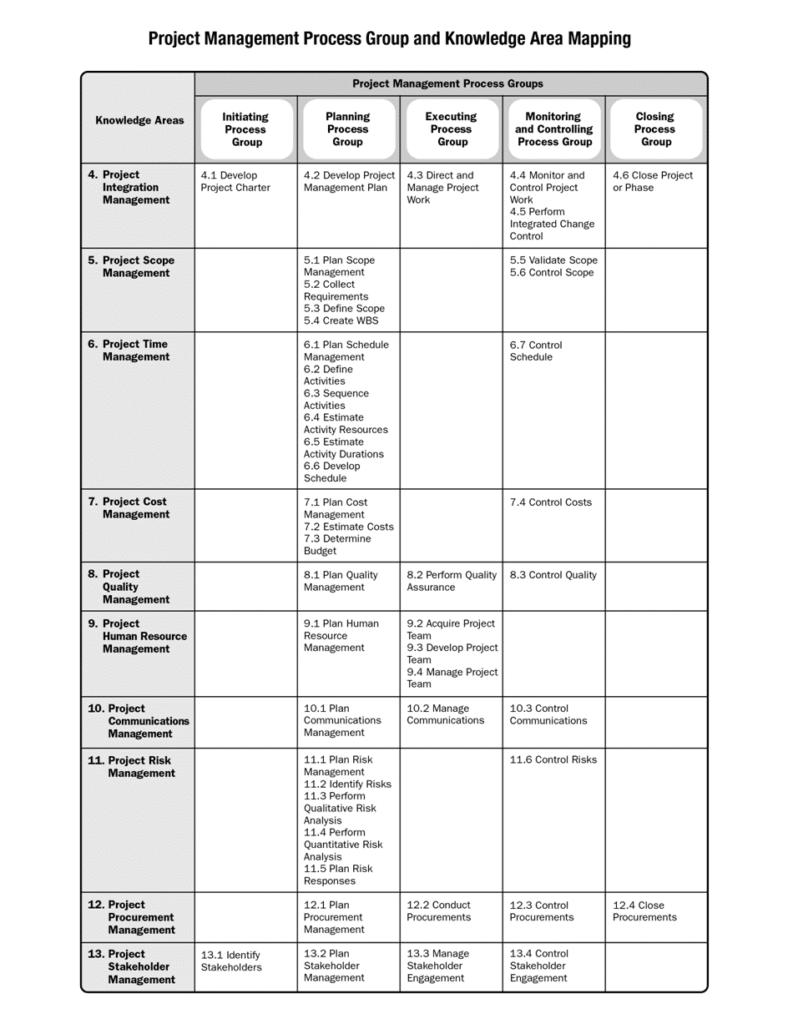
Any architect who has full knowledge of the architectural design process and design management will identify PMP tasks. Surely, any part or phase of the architectural design process includes the process groups of the PMP. Any phase includes Initiation as what is going to be done. Planning includes putting all activities in a plan. Taking the planning activities into action is the execution part. Defining the quality control for all activities is the monitoring and control. And finally, every phase should finish with a small report, which is the close-out. So here, the architectural design process and management are similar to the process groups of the PMP certificate.
Architects work in practice similarity to the PMP certificate knowledge areas
Architects at the beginning of any project conduct various activities including:
- Project site appraisal.
- Collecting client requirements.
- Building and defining project team members.
- Analyzing and studying project program and components.
- Initial cost and project feasibility study.
These activities are similar to many of the first knowledge areas of the PMP certificate of the Project integration management.
The architects advance to analyzing every activity in the architectural design process and management. To stand on the key skills required for conducting every task. Here the architect puts down the task scope and the architect scope who will conduct the activity. And the architect in charge or the design manager will identify the key management activities that assure the scope of every activity is conducted as planned where here we define the similarities to the second knowledge area of the PMP certificate of the scope management plan.
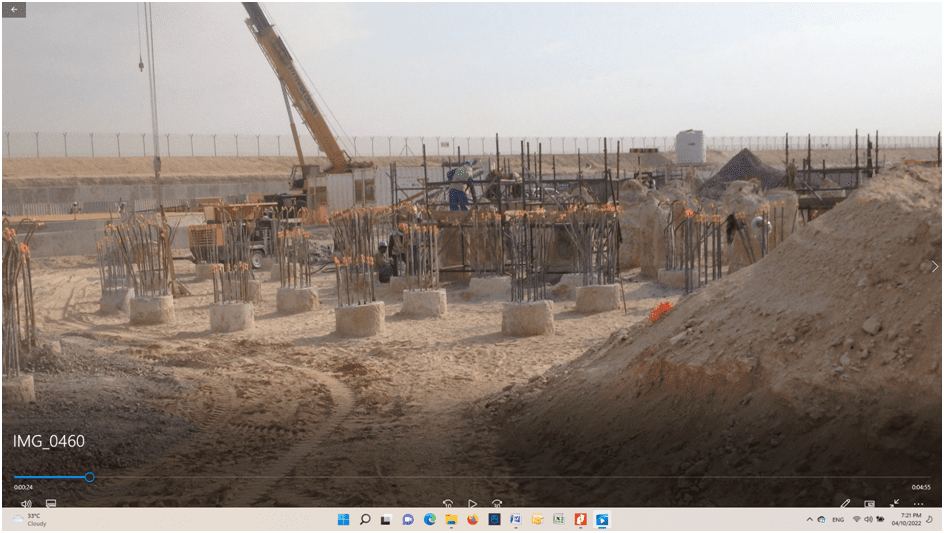
The third knowledge area of the PMP certificate includes time management. The architect allocates a schedule of all activities conducted in the architectural design process and management. The schedule includes the time frame of all the tasks and the expected completion time. See figure 2 here there was a great delay because pile construction activities were not timed properly and the contractor was forced to outsource some of the work to other companies.
Every business owner and design manager is concerned with the cost issues of any project under work in a firm. The firm and design manager estimate the whole activity cost and reach an initial estimate of the total project cost in the design phase. Here every person involved like visualizers, architects, daughters, project managers, project coordinators, and design manager cost of their work on the project comes either by the hour or by day. There are similarities between these activities to the Project cost management of the PMP knowledge areas.
Architects in charge of the project design are not only concerned about the quality of the project output like the building’s design but also the team quality work. As many firms should have An ISO certificate that assures the quality of work and people in the firm. The design manager is responsible for the quality control plan for the project design life cycle. He assures that all team members will perform within the required quality control criteria when conducting the design. The fourth knowledge area of the PMP certificate of project quality management is similar to the activities mentioned here.
The fifth knowledge area of the PMP certificate of human resource management is slightly different as the architect in charge defines the people working on the project in the beginning phase of the architectural design process. But in many cases, the design manager considers if one person leaves the team or if there will be a need for another person in later stages to control cost. Many firms do not include all the teams in the beginning, but when their role starts only.
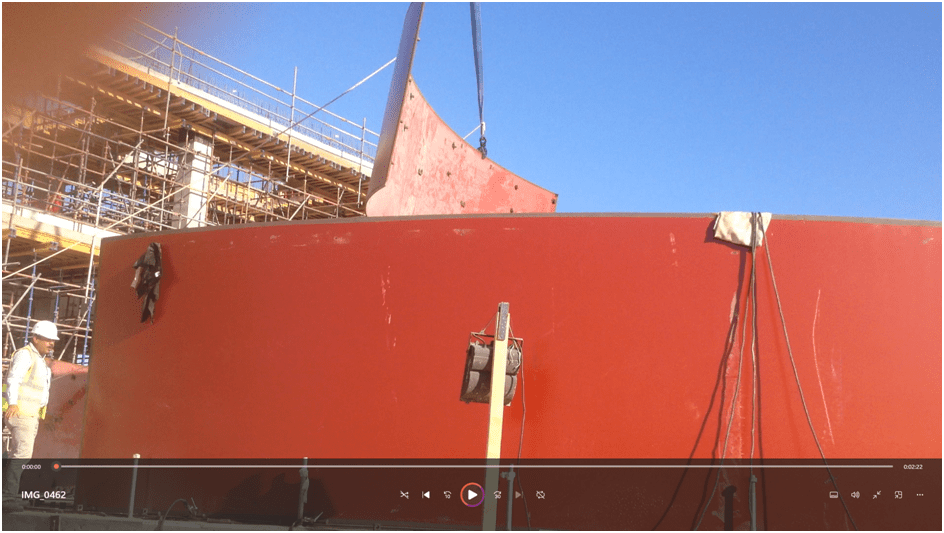
To eliminate time waste and loss the architect and design manager define the main actions required when communicating with the team and reduce the number of internal meetings but only as mentioned in the communication procedure. Here these activities are very similar to the sixth knowledge area of the PMP certificate project communication management. See figure 3 how communication is important in construction activities specifically when these types of activities are going on (thermal energy storage tank).
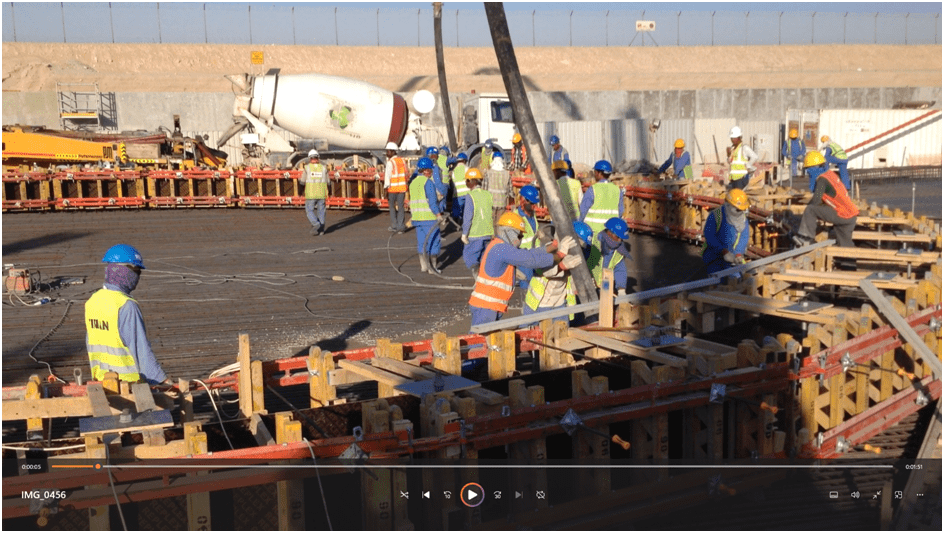
Any project under design might face risk. Risk comes from the project withdrawal, project on hold, project addition, or parts removal. These unexpected changes might happen during the architectural design process that affects the team position and work. The firm or the architect in charge must have a plan to solve these problems by relocating or adding more people to the team at different stages of the project design. The PMP certificate knowledge area project risk management is similar to some of these activities. See figure 4 here for concrete casting on site but the shutter has a special support arrangement that has a high risk of failure.
Architects and design managers consider outsourcing many of the planned architectural design process activities and in many cases parts of the project to another company like landscape architecture, project Model making, 3D and visual work of the project, and in some cases environment or sustainability accreditation work. These activities are mainly similar to the Project procurement management knowledge area of the PMP certificate.
Every architect within a design team realizes that project stakeholders are involved in their work or final phase output like clients, authorities, outsourced companies, and defiantly the firm owner. As this comes to the end of the knowledge areas of the PMP certificate of the project stakeholder’s management.
Here it is worth mentioning that construction activities include many tasks that are different in nature than the design activities but in general they are similar to a knowledge area. Architects frankly speaking do not need this certificate because they are not involved in any means with the activities that are in The PMP certificate whether they are in the design phase or construction phase.
It is up to you to decide to proceed to take this certificate to strengthen some areas of knowledge required in the construction phase.
- 2021. A Guide to the Project Management Body of Knowledge (PMBOK Guide). Project Management Institute.