Rural areas planning gained more attention in the late 2000s in Asian countries due to its importance. This article gives insights and analysis on the economic benefits of rural planning.
Table of Contents
The Role of the Transport Interchange in Rural Planning
Recommendations for rural planning
A variety of public transit options—including trains and buses—enhance mobility across both cities and rural areas planning. Yet traveling remains difficult for people who need to switch between different modes of public transport to reach their final destination. The distances between rail stations and bus stops add to transfer time, making public transit less convenient for longer trips. See figure 1, Tampines Integrated Transport Hub, Singapore.
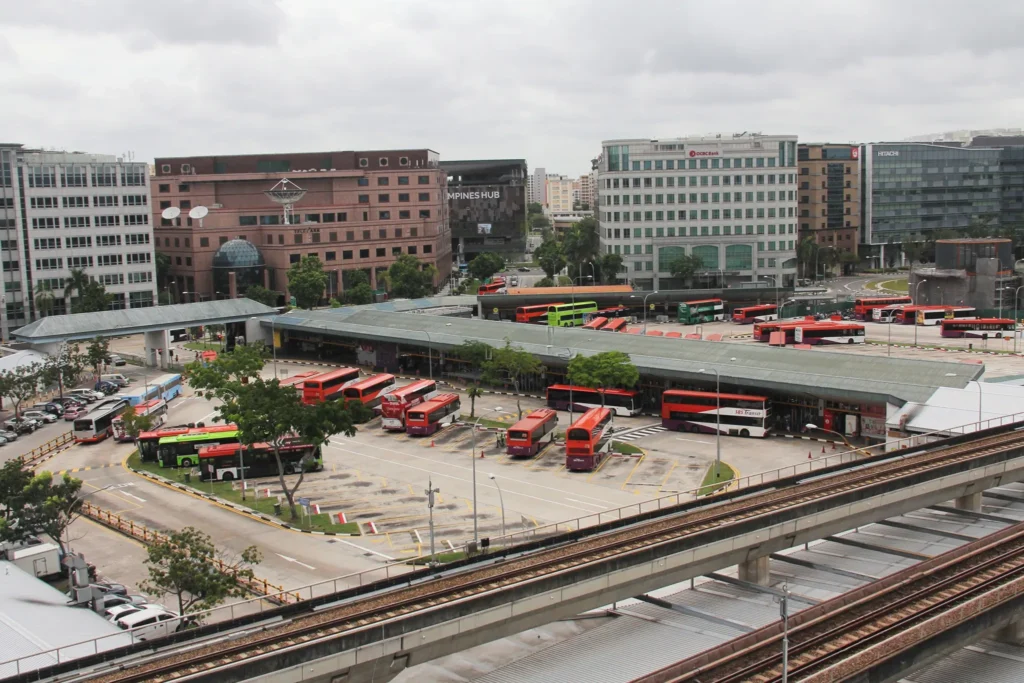
Figure 1, Tampines Integrated Transport Hub, Singapore
Transport hubs make public transportation easier to use by letting people switch smoothly between different types of transit, like buses and trains. Interchange stations help bring the public transport system together in a physical way and give travelers a smooth, hassle-free journey.
This article looks at how rural planning actually works in Asian countries. I share different examples and reports here to offer ideas that can help with future development.
Problems in Commuting
Commuting buses in China link 96.5% of villages and 99% of towns in China as per Un reports that estimation in 2019. Some governments, including China and Sri Lanka, are also proactively supporting rural services such as passenger buses.
In reality, rural areas connect main hubs by people provided transport. This includes private shared buses, taxis, and rickshaws. Furthermore, these connect people and residents to local facilities run privately.
In Asian countries lack a developed road network represent main factor of transport defects within the interchange between main transport and rural areas planning. In countries such as Bhutan, Nepal, and Kazakhstan, less than 10% of all rural roads represent paved or bituminized. This causes severe disruptions during the wet season, severing city-to-rural transport entirely.
In Indonesia, for example, the share of villages with asphalted roads is 94% in Java-Bali, but plummets to just 23% in Papua.
The staff at the World Bank developed the Rural Access Index (RAI) in the mid-2000s. That’s because they felt that conventional measures of transport didn’t fully capture the impacts of rural transport investment.
Planners measure The RAI as the “share of the rural population who live within 2 kilometers (typically equivalent to a walk of 20-25 minutes) of an all-season road as a proportion of the total rural population. See Figure 1, the RAI index for measuring rural areas’ transport.
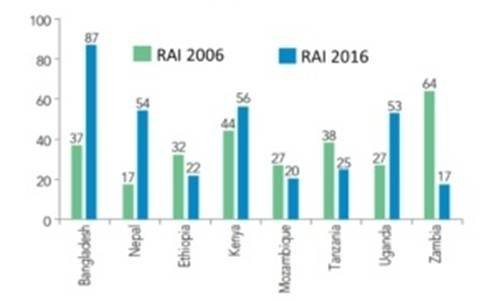
Figure 1, Comparison of RAI using two different approaches, 2006 and 2016
The Role of the Transport Interchange in Rural areas Planning
Physical integration of the public transportation network is essential to convince people to shift to public transport use. Also, it involves the development of transport connectivity and transfer facilities to provide suitable transfers among different transport modes. Furthermore, related bodies can achieve this through the creation of a transport hub. a complex of transfer facilities that combines rail stations, bus depots, and terminals.
Also ticketing booths and passenger facilities, transfer paths, and other. Passengers are assured links at transport nodes, where transfer frequency is higher between such modes as subways, buses, taxis, cars, and bicycles.
For regional trips, interchange stations can be in the form of super-hubs, hubs, as well as sub-hubs, depending on the roles and functions of each node where transport connectivity and transfers occur.
Physical integration has been implemented in many Asian countries.
- Jakarta’s Dukuh Atas Interchange: In Indonesia, Jakarta has made a massive push toward multimodal integration. Such as , Dukuh Atas serves as a core physical bridge connecting the Jakarta MRT, LRT, Commuter Rail, and the TransJakarta Bus Rapid Transit (BRT) network, allowing thousands of outer-province commuters to transition smoothly into the inner city.
- Tokyo’s Shinjuku Station and Busta Shinjuku: As one of the world’s busiest transport nodes, Tokyo’s station layouts prioritize zero-distance transitions. Certainly, Busta Shinjuku is a massive terminal built directly on top of the train tracks, consolidating long-distance express buses, local buses, and multiple subway lines into one vertical complex.
- Hong Kong’s “Rail plus Property” Model: Hong Kong connects intra-city subways (MTR) with regional High-Speed Rail (HSR) and local bus terminals. Besides, West Kowloon Station physically stacks underground rail networks, public plazas, and drop-off hubs beneath massive residential and commercial towers, making transfers seamless.
- Singapore’s Integrated Transport Hubs (ITHs): The city-state features dozens of fully air-conditioned, physically integrated complexes. Also, commuters can step off a Mass Rapid Transit (MRT) subway train and walk straight into an enclosed bus interchange, completely shielded from the elements. High-profile examples include Jurong East, Tampines, and Woodlands.
Interchange stations can also be built at rest stops along major express highways. Inter-regional buses from across the country make stops at designated rest areas on major expressways before continuing to their final destinations. These intercity—or inter-regional—bus services could enhance rest stops by offering refreshments for passengers and basic vehicle maintenance. If passengers were able to transfer between different bus lines, they could take full advantage of these transfer centers.
Recommendations for rural planning
Planners widely regard the physical integration of the public transport network as a key factor in achieving seamless travel. Certainly, the essential measures for its implementation include:
- A comprehensive master plan for physical integration, developed from a detailed field survey of transfer facilities;
- A hub-style transfer facility based on that master plan, along with upgrades to existing facilities;
- An operation and management centre for those facilities; and
- Revisions to laws and principles governing the development of transfer hubs.
As an example at Dongdaegu KTX Station in Korea, physical integration can be realized by
- relocating bus terminals closer to the train station to maximize feeder line connections;
- developing specific designs and layouts for transfer facilities and bus stops; and
- reducing unnecessary wait times through coordinated scheduling of arrivals and departures.
For expressway transfer centers, physical integration can be achieved by expanding the number of transfer centers on expressways. In addition to national highways, as well as by upgrading these centers to provide access to and from local buses, taxis, and other feeder services.