Urbanism: What are the key elements of good urban governance? is the sixteenth article of a series1,2,3,4,5,6,7,8,9,10,11,12,13,14,15,16,17 . It assesses the dialectic of architecture and urban design in the urbanism field. I will go through this relationship from the top scale of urbanism in the city to the smallest scale of urbanism components of urban space.
In the first article on how political governance creates urban change, I have analyzed many research papers. In addition to publications on the subject in practice. Politicians’ issues and build urban governance with concern of four main criteria.
- Human concerns are the first. A focus on many urban issues related to society. For example, human rights of Citizens as well as improving social conditions. For instance, poverty and social despair.
- The economic interest includes many issues, such as economic development. Also, concerns about the urbanization process relation to many elements. For example, they include capitalists’ socialists private, and public partnerships. Also, entrepreneurial urbanization. Finally, transformation approaches and changing political ideology to solve market problems.
- The cultural and national loyalties which include many issues. Political change towards a new successful urban change. Consideration of political power in the process of creating political governance. Finally, private sector leadership and delivery of governance.
- The religious commitments include the determinant of laws controlling people’s relations. Also, freedom of practicing religions and beliefs. Finally, initiatives that support religious activity in society, and government support.
I have analyzed these criteria, and the results show the following. Human concerns related to human rights are about fiscal matters. In addition, it’s management to create, for example, employment access to funds and social support. Also, many matters could reduce poverty and social despair. Economic interest without spending hours of analysis main matter is the funding process and management.
Cultural and national loyalties main matter is power and decision-making. Also, how to build successful political governance. Thus, that means economic success of capital flow, and its management. Religious Commitments’ main matter is human value represented in the social religious relationship. The government achieves this by raising awareness programs and funding religious activities.
To sum up, the four main criteria include fiscal flow, funding, and management. In addition to power, decision making, social, religious relations, laws, and social activity Funding.
The main subject of these four criteria is capital spending and management.
The previous article was about the relation of economic governance to urban development. I have discussed research papers on the role of economic governance in urban development in practice. Economic governance is the management of a country’s economy. It has various roles in the organizations and people’s rights within the country’s economic system. Also, providing the essential infrastructure for economic activities for the public sector and the private sector. It deals with the two sectors of the economy, microeconomics and macroeconomics. The former deals with the economic growth stimulation of the country. While the latter deals with the study of decision-making in related business.
In addition to allocating resources and prices, it consists of the supply and demand of the market.
Table 1, the four principles of economic governance
| Inclusive urban economic growth | The national and local contribution of economic growth to sustainable development |
| Economic growth must be in a strong rights framework | Economic growth must enable informal livelihoods |
Economic growth is related to the social dimension of governance. Such as poverty reduction, equity of growth per region. Also, local people’s ownership of development projects.
Economic governance on a larger scale deal with the management of fiscal flow in the country to stabilize the country’s economy. In addition, how to direct cash flow to protect people’s rights by providing the essential infrastructure. Governance in Macroeconomics view is to strengthen the economy. In microeconomics, it’s how to guide businesses to proper and successful decision-making of using their funds through proper management and pricing. The four principles of building economic governance main subject are increasing the country’s capital and reducing loss. Furthermore, protecting financial resources and supporting informal businesses to support business cycles.
To sum up the social dimension of economic governance concern is to protect human rights. That is so in development and ownership, which means that capital is directed equally to people. From the political dimension, how the political system is managing the country’s capital. Also, how it is directed to the growth of the economy and development projects. The main subject here represents how the government directs capital flows in the country’s economic system. And how it is managed for the well-being of society.
I have articulated and analyzed in my article about environmental governance and its role in shaping the urban form from various research papers and practice publications. I have analyzed how the government build environment governance and the similarities to building public policy. Within the process of building and issuing it, many barriers and obstacles arise. For example, on the global scale, a competing interest in producing environmental governance. That is when some countries are not affected by the environmental issue and are forced, due to global contribution, to achieve and apply. Another barrier arises when the environmental agency has limited funds, assets, and workforce to deal with the evaluation and implementation of it.
The logic of capital constraints at various levels, the local and international, has its effects on achieving it. Modernizing industries to cope with environmental issues. Also, the efficiency of energy use and waste reduction not only needs professional people but also high-level involvement from many engineering disciplines and others.
Critical issues arise when an agency starts the process of building an environmental governance. For example, involving the international political agenda, especially when the countries are from different political backgrounds and directions. The difficulties within the process of building it.
Environment governance’s main subject, whether it is on the global, local, or city scale, is the capital reserved to support the implementation. The various issues facing building governance, such as evaluation, implementation, and coordination, rely on many aspects. For example, the amount of capital to supply the workforce and mobilize the assets towards achieving it. The capital and its flow reserved for defining the team of the related body to implement any governance represent the main factor of success.
A good urban governance key elements include the capital reserved to fund its creation. The political system is adaptive and friendly with other political systems during urban change. In addition, the availability of sufficient knowledge and professionals to run the operations towards their successful end.
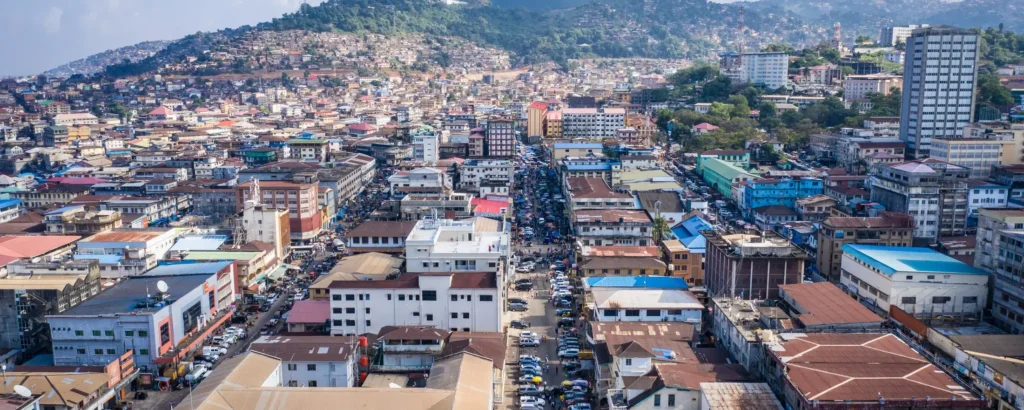
One of many initiatives that discuss the creation of urban governance was in cop26 in Glascow of the various political, economic, and environmental dimensions to better cities and environment. figure 1 is one of the targeted cities of the discussion.