Urbanism: the dialectic of architecture and urban design is the first article and an introductory article of a series1,2,3,4,5,6,7,8,9,10,11,12,13,14,15,16,17. Urbanism is a word that appeared in many areas of research and professional critic reports. Surely, a massive number of papers, journal articles, and even online articles addressed urbanism. Specifically, from many fields of specialty and as well as various topics in the same field give hesitation and frustration on how this field contributes to architecture and urban design in practice. In the coming articles, I am going to define the areas of intervention of urbanism between architecture and urban design.
Table of content
- What is urbanism? And why urbanism?
- Research and practice topics in various fields of concern.
- Urbanism the dialectic of architecture, areas of interventions.
- The 6 dimensions of urbanism the dialectic of architecture & urban design
Urbanism the dialectic of architecture recent research
Architect’s and urban designer’s frustration can be cleared out when these two questions are answered, what is urbanism and why urbanism?
- John1 says everyday urbanism is defined as the common, repetitive, or spontaneous actions that take place in the interstitial spaces between well-defined territories of home, work, and institution, as when a yard sale transforms a lawn into a venue for economic exchange.
- Nan2 says good urbanism adds a few instruments to our planning and design toolkits that enhance the health and well-being of places and move beyond sustainability to prosperity. Also, it enhances places by revealing and celebrating these existing gifts, rather than focusing on deficits and problems. Moreover, the gifts may include natural landscapes, buildings, neighborhoods, businesses, cultural institutions, history, and cultural traditions, as well as talents, ideas, and skills of stakeholders.
- Jeffrrey3 says about urbanism is the increased importance of the emerging consilience of context, local conditions, and the global operating systems. In addition, he elaborates that in the continuous discourse on the design of cities; urbanism opens avenues of critical inquiry when calling for the integration of theory and action.
- Jeannette4, within the increasing space of discourse of architecture, a new field emerged that is landscape urbanism as a set of practices and theories in the last 15 years. During this time, certainly a considerable number of articles, books, and journals, as well as design projects and academic programs, have been dedicated to the project of landscape urbanism. Surely, urbanism in general and landscape urbanism emerged in the late 1990s as a critique of the urban design’s inability to deal with the expanded character of urbanization. Thus, from these definitions, it is apparent this frustration about what is urbanism.
In the following video an academic discussion in Zurich about the role of design in urbanism and architecture research.
Urbanism came to the surface of various fields as practices and theories in the late 25 years because of globalization. Globalization is a term that appeared in politics, economy, sociology, geography, and also in cultural studies. And because of these fields, where some, have a direct impact or indirect impact on architecture and urban design professions are important to consider in nowadays practice. See figure 1 politics effect on informal settlement.
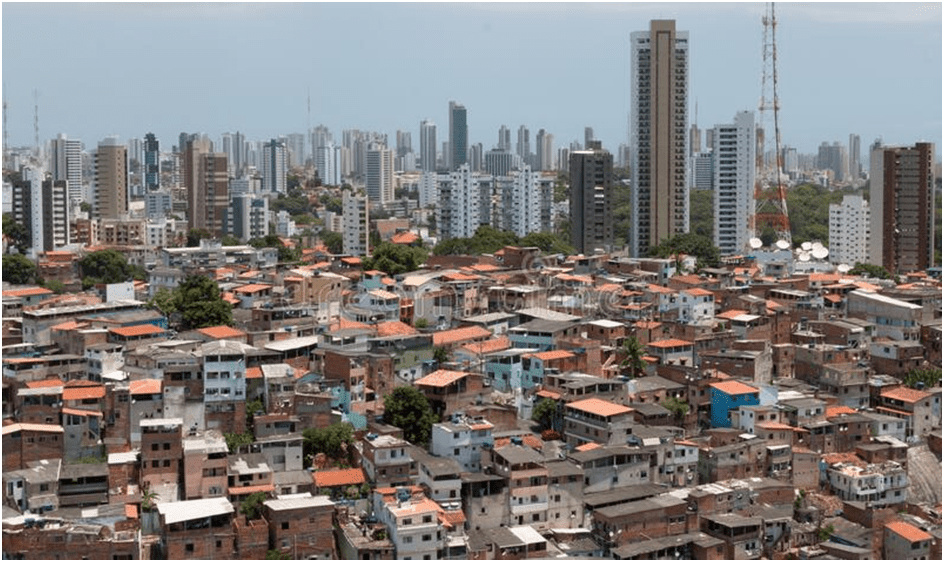
Before getting into the urbanism the dialectic of architecture and urban design a quick look at the topics circled in the journals, papers, and reports within urbanism.
Research and practice topics in various fields of concern
In terms of politics, Surely, we find:
- Neo-liberal urbanism
- New globalization
- Post-colonialism
- Global culture
- Utopianism
- Moral urbanism & asylum
- Austerity urbanism
In addition, in the economic field, we find:
- Occupancy urbanism
- Circular economy
- Speculative urbanism
- Fetishism of global civic society
- Economic patterns
- Entrepreneurial urbanism
Furthermore, Sociology introduced many topics in urbanism such as:
- Urbanism as a way of life
- Migration and tolerance
- Suicide cultural studies
- Subcultural theory
- Religious pluralism
- Neighboring, and so on
Finally, geography is one of the main fields that underpin urbanism practices and theories for example:
- Urban gentrification
- Market society
- Cyberspace and cityscape
- Mapping diversity
- Race-insurgency-crisis
- City information modeling, and various topics.
Topics of urbanism such as urban space, placemaking, urban density, mobility. Also, urban form, adaptive city, urban regeneration, and intensification, landscape as a system. In addition, green landscape, landscape infrastructure, heritage, and place context, all subtopics of sustainability. Surely, topics of eco-system and city Include: townscape, urban metabolism, future city, eco-architecture, type and typology. Moreover, conservation, housing and development, smart city, gentrification, built environment topics. Finally, urban sprawl, public spaces, rural development, dispersal cities, urban pollution, urban ecology, and more.
Urbanism the dialectic of architecture areas of interventions
Architecture in practice as a process and profession includes many areas of interest, concerns, and relevant topics.
- Architecture as a building is an important physical object in the city, and its integrity is a high concern of designers and architects.
- Surely, its surrounding space and environment relate directly to the building under design.
- The space function relates to humans and mobility in terms of its relation to adjacent building spaces, and automobile movement is certainly one of the major architectural design elements.
- Moreover, the building’s character and its relation to the city’s heritage and cultural context have a great impact on the building form.
- Architects around the world have dealt with urban space in a creative way that affected the building architecture and vis-versa see figure 2.
.
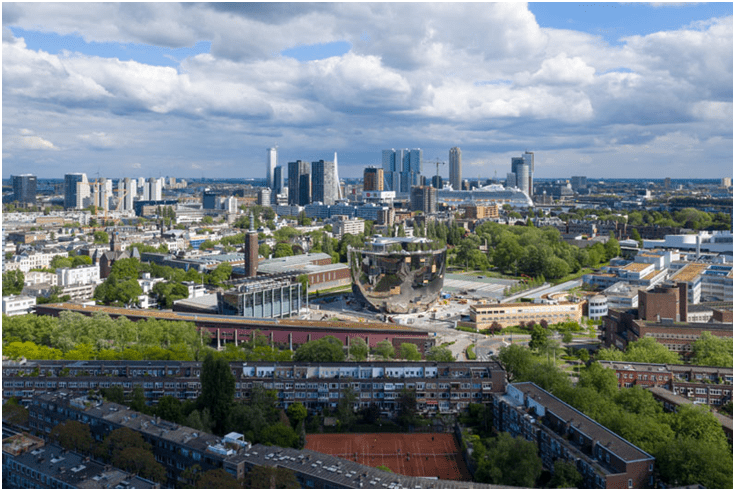
Surely, urban design on the other hand, as well as a process and profession, is concerned about any element in the city. Elements such as it is hardscape, softscape, or urban fabric from the design and rehabilitation perspective.
The 6 dimensions of urbanism the dialectic of architecture & urban design
Certainly, from my previous experience in practice of architecture, urban design and urbanism research I have concluded these dimensions. Definitely, they interact and intervene in each field concurrently.
Human: Quality of life Health and well-being, poverty, and as well as deprivation cause.
Environment: Pollution of air and water by industrial activities and the earth degradation and quality for agriculture and Landscape.
City design: Urban form and fabric best pattern for human use. Also, neighborhoods design and balance with landscape to serve quality of living. Deprivation of towns and sectors, and its major causes.
Systems: The effect of biodiversity on the balance of our planet’s systems of plants, living species, and humans.
Cost and benefits: The effect on the effective use of natural and man-made resources for Urban Development, and to give them the planned and estimated benefits.
Politics: The role of government is to assist in achieving the former dimensions by supplying effective initiatives.
This is a brief introduction to urbanism the dialectic of architecture and urban design. Surely, In the coming articles, I will go through assessing the major intervention of architecture and urban design and its dialectic within the urbanism field. The articles will focus on the profession and practice point of view. Assessing the many topics and their contribution and necessity in practice, their involvement in the design process, Major players that could enhance and produce and change the product quality and its location characteristics, in which areas of the architecture or urban design process a defect or ignorance exists that leads to a major or minor failure.
Where this fits in practice: I bring the whole series together, from the city down to the building, in Urbanism Role in Professional Practice: How Research Became Hidden Rules.
Related Topics
For deeper exploration, see related content on Environmental planning, Green architecture, Sustainable urban development, TOD , Architecture practice , Urban Design , Smart Cities, Urban renewal.
references:
- Chase, J., Crawford, M. and Kaliski, J. (2009) Everyday urbanism. New York: Monacelli.
- Nan Ellin (2012) What is good Urbanism?, Journal of Architecture and Urbanism, 36:4, 247-251, DOI: 10.3846/20297955.2012.756216
- Hou, J. (2015) Now urbanism: The future city is here. London: Routledge.
- Sordi, Jeannette. (2016) Beyond urbanism. Trento: Listlab Srl.
- Smith, N. (2017) “‘New globalism, new urbanism: Gentrification as global urban strategy,’” The Globalizing Cities Reader, pp. 251–256. Available at: https://doi.org/10.4324/9781315684871-35.
- He, S. and Wu, F. (2009) “China’s emerging neoliberal urbanism: Perspectives from urban redevelopment,” Antipode, 41(2), pp. 282–304. Available at: https://doi.org/10.1111/j.1467-8330.2009.00673.x.
- Dear, M.J. (2001) “Postmodern urbanism,” International Encyclopedia of the Social & Behavioral Sciences, pp. 11856–11860. Available at: https://doi.org/10.1016/b0-08-043076-7/02592-4.
- Lee, C.C.M. and Jacoby, S. (2011) “Typological urbanism and the idea of the city,” Architectural Design, 81(1), pp. 14–23. Available at: https://doi.org/10.1002/ad.1184.