Urbanism: Does Environment Governance Impact City Urban Form? is the fourteenth article of a series1,2,3,4,5,6,7,8,9,10,11,12,13,14,15,16,17 . It assesses the dialectic of architecture and urban design in the urbanism field. I will go through this relationship from the top scale of urbanism in the city to the smallest scale of urbanism components of urban space.
In this article, I will discuss and analyze what are environment governance, and environment governance creation. Its relation to decision-making and power, where environment governance is initiated. The scale of it and its application, and how environmental governance impact urban form.
Our planet (earth) is subject to many environment changes, some of these changes are out of our control and some are the consequences of our work, urban development, and creation whether it’s a physical or non-physical product.
So, what are the drivers of environment change?
Our planet was created in extreme balance, soil-water-air, and all creatures have their role in creating this balance. The three components were and are still subject to influence by forces out of our control like natural phenomena of floods, typhoons, drought, and sea and ocean level rise. Also, other factors that lead to environment change are human interaction with the three components of our planet such as changing levels of carbon dioxide, and Nitrogen that directly affect the atmosphere such as increasing air temperature and the concentration of Ozone. Surely, the deposit of various chemicals into the soil and water creates pollution such as sewage, fertilizers, pharmaceuticals, heavy metals, petrochemicals, and nuclear materials.
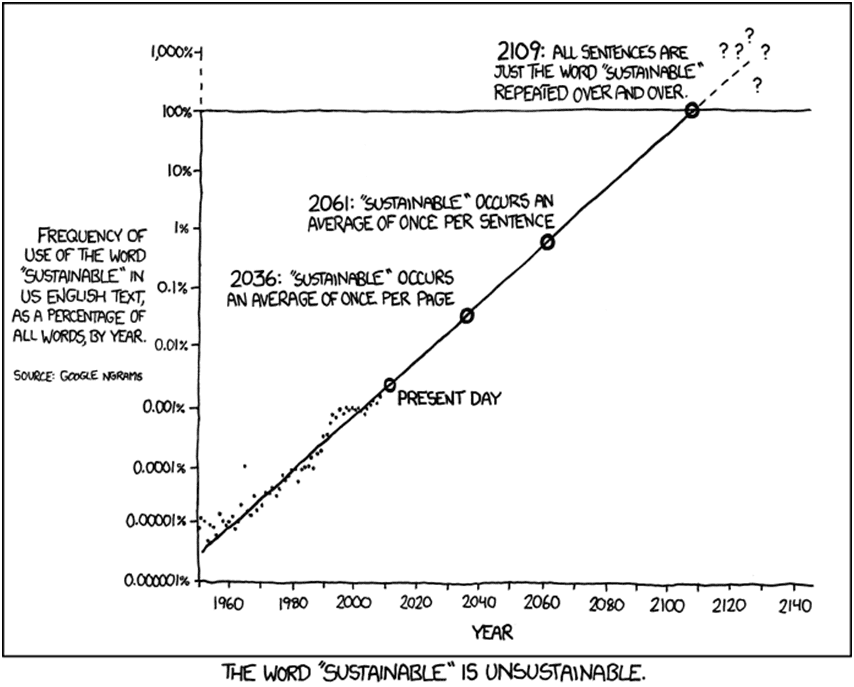
Environment governance is a set of rules, laws, and policies that determine the way that an environmental body should manage its environmental affairs to ensure sustainable development and all human activities. see figure 1.
I have discussed in my previous articles the close link between urbanism and the human way of life. Also, to the many methods and tools used in urban development, like Urban regeneration, sustainable development, and see the links list at the beginning of the article. Public and private sectors use the former tools to solve or create development to serve critical matters of economic decline or social problems. A set of rules and guidelines determines how these sectors approach sustainability, which includes environmental governance.
Now, who creates environment governance?
Environmental governance is created depending on the level of damage they create and the location of damage. If the damage touches the three common areas of the planet which the Air, and water then a direct involvement of the highest level of government must exist like the COP28. global communities expect Governments in the world represented by their high officials like the president, the king, the prime minister, and the minister of environment to attend the summit. That is at the global level. Environmental damage can happen at the regional level between adjacent countries such as pollution of waterways, green space connections of forests, and earth pollution of dumping waste. At the same time, environmental damage can happen at the local level, of the country, similarly. At the city level damage could happen to air earth, and water by depositing polluted material or through the sanitation system.
Finally, at the personal level, people should take responsibility to protect their neighborhood and town by eliminating polluted actions like throwing waste, and polluted materials, and reducing the polluted activities but only when there are protective actions.
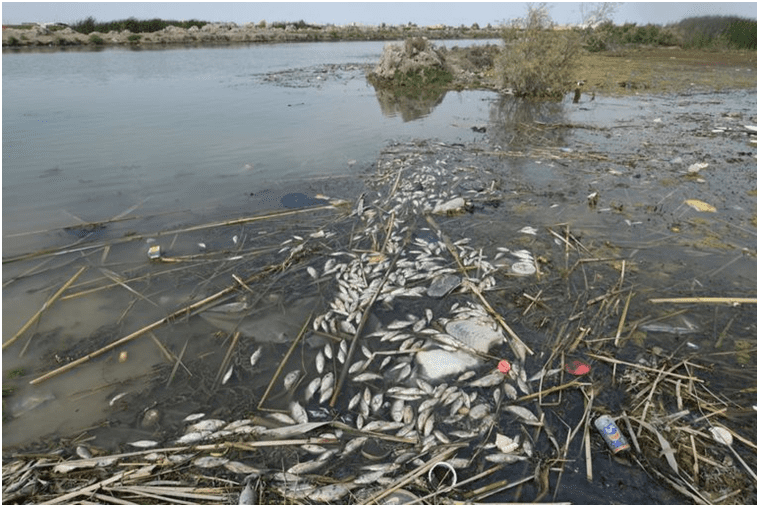
Environmental governance can change a city’s urban form. If pollution hits the air in any place in the city people will start moving to safe areas and when cleaning the damage becomes costly, many inhabitants will directly take action to move to safer areas in the city. For example, a waste dump area within the city margins directly makes people move from the area when the air becomes polluted and hard to breathe. Notably, the city will lose most of its assets like the service systems that the government built for people to use, and they need to restructure the area. Earth pollution from sewage system for example have a direct impact on the city’s urban form. A reconstruction of the sewage problem and the homes and buildings affected will cost the government and private owners lots of money.
The money needed to demolish and rebuild parts or full buildings or homes. Earth contamination will continue and people living comfort reduces at the lowest level. Waterways and beds that receive polluted deposits like chemicals or waste will make them produce a damaging smell and it might affect the health if the effect is from chemicals. Also, a decline in this area and the area will become deprived and uninhabited. Damage to property and its value and loss of assets public and private. See figure 2.
What does environment governance do?
Environmental governance has three roles prevent, control, and mitigate environmental problems. There are many ways environmental governance prevents environmental damage and impacts the city’s urban form. The increase of green surfaces whether grass, trees, or shrubs in public spaces, in new urban development, in urban regeneration projects, and in home design will decrease the amount of carbon dioxide in the atmosphere. Restricting the use of hazardous materials and industries in certain areas and their waste deposit will prevent environmental pollution. Environmental governance is concerned about the control of the amount of damaging gases in the air, water, and earth. Adding to that all actions, procedures, and processes related to handling hazardous materials and using them in industry.
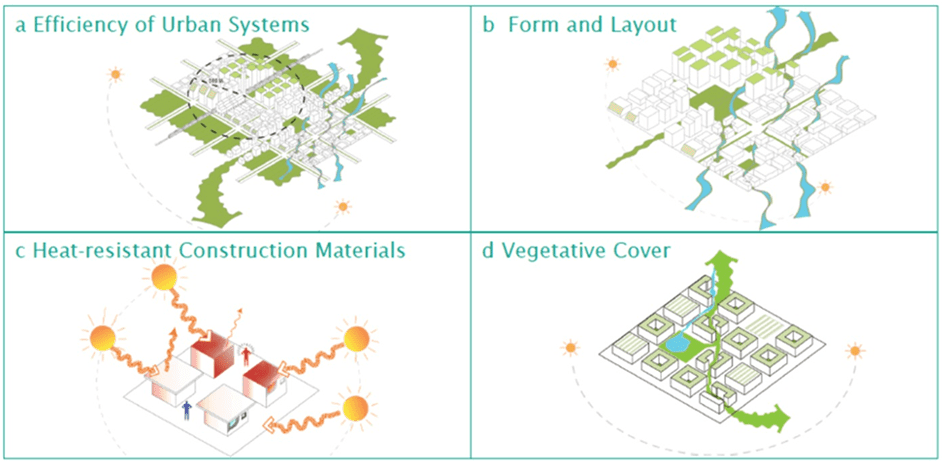
The urban planners and designers plan and design cities, towns, and neighborhoods in terms of orientation, grouping, and solid and void in urban space to reduce the direct effect on many related environmental matters. For example, the heat island effect, airflow and cooling, shading to reduce environment heat, and amount of green space and urban space in development see figure 3.
Environmental governance mitigates the effects of environmental problems. For instance, carbon dioxide emissions can come from many sources. Such as factories, cars, farming, fertilizer, and other chemical sources. That is by defining the proper measures to reduce their effect.
Environmental governance regardless of the level it is related to from the top hierarchy to the lower level the person and regardless of what it intends to do, function, face a critical matter when it is issued. That is who has the power to enforce it for application?
Related bodies can issue environmental governance globally and countries can use it locally. Even if the government gives the power to lower-level authorities to enforce the application of the environmental governance there are still three matters that obstruct the application. The three matters are decision-making, resources, and acquisition. When an environmental problem happens, a group of specialists issue a full report about the matter, and relevant people must take a decision. Decision-making itself is not the solution even if the government gives the green light to take action but assessing the submitted report and defining the number of resources for that action.
These resources include the amount of funds, the manpower involved, and the solid assets for the use in the action. All these need approvals and some might have a direct connection to the higher level of government. In many cases deciding to relocate a waste dump or changing sewage direction needs the acquisition of land. Here a problem arises which is land ownership and how to acquire it for development. So, if the government decides to build a waste treatment plant or a sewage treatment plant there is still the problem of land ownership and land is not always in the government’s control.
I have discussed and analyzed who creates environmental governance, the level of environmental governance, the power to enforce it for application and related problems, and what environmental governance does. Thus, and now how relevant individuals build an environmental governance?
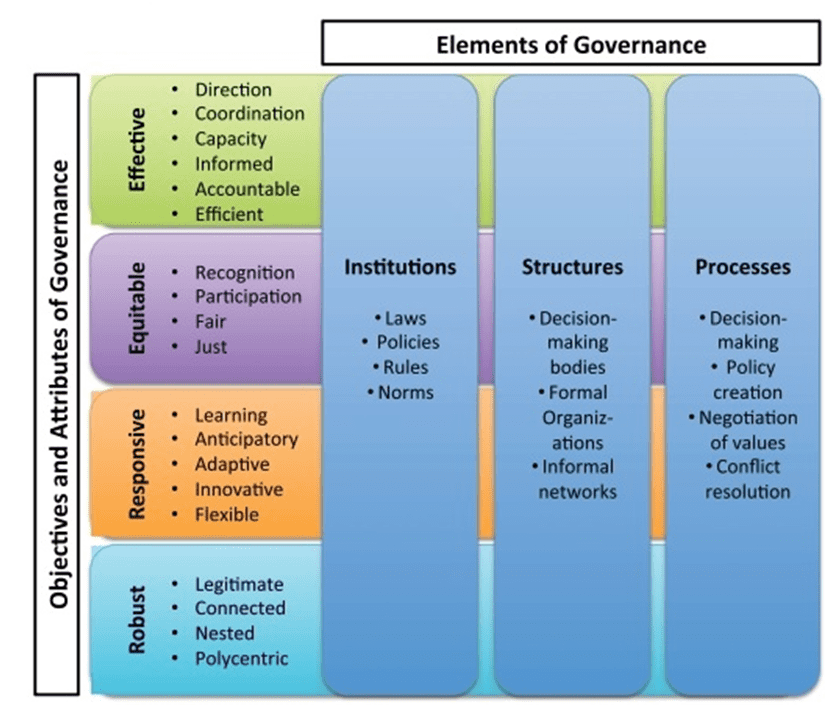
Bennett1 paper shows that several types of environmental governance exist and cycled in the research arena. For instance, equitable environmental governance, responsive environmental governance, and so on. Also, he provides an illustrative figure of the elements of environmental governance and their relation to the types of governance attributes and objectives. See Figure 4.
Davidson2 ,in his paper, introduces various matters where the focus in the process of building environmental governance includes competing interests in producing them. Also, agencies have fewer resources to function properly. Furthermore, the logic of capital hinders the state’s work, either at the national or world system level. Environmental responsibility of modern industry direction in practice towards energy efficiency and waste reduction. Raising these issues to the global agenda and these pressures have surely led to the rise of national environmental policy and treaties.
One3 of my research studies on the building of public policy from the highest political revealed similarity matter. Relevant bodies build environmental governance in the same approach. They develop policies and governance within the context of particular economic, political, and social conditions. So, these involve major decisions, including prioritizing across competing needs and policy areas, the distribution of resources, and the need to be in a position to respond to future developments, problems, and challenges. Notably, officials and non-ones use the same model to build governance and policies. See Figure 5.
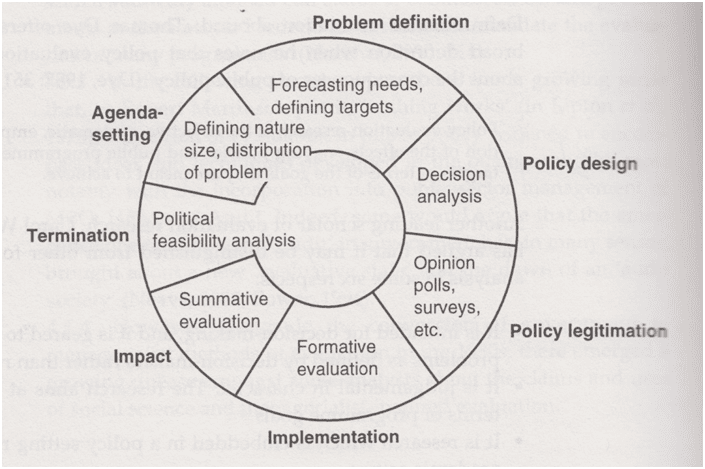
Environmental governance impact on urban form exists in architect’s work. Surely, as I have shown here, officials build them in a specific way using a specific model. It includes various levels from global to the lowest the person. Critical matters such as the power to enforce the application and what environmental governance does in practice. It’s another form of sustainable development; architects in their work are held to achieve quality building design to reduce the impact of creating environmental problems. For example, heat islands, fresh air circulation, proper external and internal lighting, and solid and void spaces to create shading to cool external spaces. In addition to proper services design to eliminate sewage problems and water pollution.
Environmental governance impact on city urban form- urban designers concerns
Urban designers on the other hand, as illustrated previously, are directly concerned about many matters.
- Low carbon emissions, reducing environmental heat, and environmental gas pollution, increasing green space.
- Increasing shading on external spaces and buildings to reduce heat exchange, reducing the external surfaces that absorb heat.
- Using low heat emission materials, decreasing car park lots, reducing the number of motorways and roads.
- Ensuring that buildings are grouped to create maximum temperature difference to make wind flow between buildings.
- Allocating the services buildings in the proper location to reduce pollution and prevent it easily.
- The creation of human pathways between the development to encourage walking and physical activities.
- Using proper vegetation that produce more oxygen in the atmosphere through selecting bigger green volume trees and shrubs.
- Making the development more attractive to live in and use by reducing noise disturbance generated from activities or cars.
- All the urban space and roads network safe to use on daily basis.
Many governments, officials, and other society bodies representatives join in environment governance summits, and meetings. In order to protect our environment and they are active. They are involved and motivated to find solutions to its problems. For example, CO2 emission and spend millions on advertising their role and leadership. but the result is neglectable. So, (video 1) shows one of Middle East influential cities, in advertising and show, the business bay area.
Environmental governance impact on city urban form- project from practice
The development is 4.67 Km2 . The area was planned in 2005 by an international firm as a leading model of urban development. It nearly took 18 years to build this area and still not completed. The development is chopped into plots, adjacent to each other, I was involved in 4 of its tower design developments from the client side, the towers are neglecting their surroundings by building full external glass envelopes. Also, the towers depend on active AC the whole day. Most of the tenants rely on basement car parks which is not a solution because you are still using the road network and removing parking from roads to the basement is not a solution. Furthermore, traffic flow and volume are the same. The absence of proper urban corridors makes people move on the main roads in the ambient heat reaching 58c.
In addition to the public transit station only serves the adjacent towers where most of the area is accessed either by car, walking for more than 25 minutes, or by bus strictly with a table. The development was built first, and the main arteries were built where the metro followed at the end of 2009. A puzzle of bridges, main roads, and sub-roads serves the area that was constructed after 75% of the development completion. Thus, environmental sustainability does not mean plotting a waterbed that does not serve anything, and that exists in this development.
Finally, this development does not include but only 1% of green space mainly the roads islands between two lanes only. Involvement in the world summit does not mean anything when the results on the ground are neglectable, and this is a sample of urban development that neglects all global environmental governance, sustainable development, and community building in planning and urban design.
Where this fits in practice: I describe one district where the towers came before transit and green space in Urbanism Role in Professional Practice: How Research Became Hidden Rules.
Related Topics
For deeper exploration, see related content on Environmental planning, Green architecture, Sustainable urban development, TOD , Architecture practice , Urban Design , Smart Cities.
References:
- Bennett, N. and Satterfield, T. (2018) Environmental governance: A practical framework to guide design, Evaluation, and analysis [Preprint]. doi:10.31230/osf.io/n2ahd.
- Davidson, D.J. and Frickel, S. (2004) ‘Understanding environmental governance’, Organization & Environment, 17(4), pp. 471–492. doi:10.1177/1086026603259086.
- Talib, H. (2017) Comparative analysis research for UK governments planning policies, [Preprint].Liverpool university.
- Armitage, D., de Loë, R. and Plummer, R. (2012) ‘Environmental governance and its implications for conservation practice’, Conservation Letters, 5(4), pp. 245–255. doi:10.1111/j.1755-263x.2012.00238.x.
- Satterthwaite, D. (2001) ‘Environmental governance: A comparative analysis of nine city case studies’, Journal of International Development, 13(7), pp. 1009–1014. doi:10.1002/jid.824.
- Gouldson, A. (2009) ‘Advances in environmental policy and governance’, Environmental Policy and Governance, 19(1), pp. 1–2. doi:10.1002/eet.497.
- Bouteligier, S. (2014) Cities, networks, and global environmental governance: Spaces of innovation, places of leadership. New York: Routledge.
- Lancione, M. and McFarlane, C. (2021) Global Urbanism Knowledge, power and the city. London: Routledge.