Urbanism: Diversity, Smart Growth, and Future Urban Design is the eleventh article of a series1,2,3,4,5,6,7,8,9,10,11,12,13,14,15,16,17 . It assesses the dialectic of architecture and urban design in the urbanism field. I will go through this relationship from the top scale of urbanism in the city to the smallest scale of urbanism components of urban space.
A direct link between urbanism and lifestyle always exists. It focuses on how people interact within their communities. The goal of urbanism is to enhance daily interactions across different social levels. Since its introduction in urban planning and design, urbanism has become a key topic in academic discussions, research, and practice. Urban planners frequently connect keywords like diversity, smart growth, and urban design in these conversations.
So, what exactly is diversity? Is it a strategy or a tool? In which fields is it applied? Does diversity contribute to smart growth? Moreover, how does it influence the future of urban design in practice?
Planners treat diversity as a key concept in social science for building balanced societies. Diversity means people of different incomes, races, skin colors, religions, nationalities, and beliefs. Also, social science experts argue that such a mix maximizes value, equity, social justice, and citizenship. In turn, this keeps society safe and balanced by reducing problems like crime and drug use.
In politics, the keyword diversity has lots of meanings. As far as political activity requires within the government diversity and inclusion. Including several sectors of the political society as parties in the government. In this manner, polling stations will be full on election day because all parties take part and have their share in governing. Standards require having a variety of voices, views, and perspectives within the political government operations. For that politicians consider it as healthy practice due to its inclusion of all society and their representatives.
Cities in the world either flourish or die relevant to their economic status. In economic practice, governments and private firms plan and design diverse economic policies. City planners in any country design towns to include several types of economic activities, sectors, and businesses. Thus, cities flourish because of available diverse sectors. As a result, they provide a place for inhabitance and move the economic cycle and business cycle in the city.
Urban design research and practice have circled the keyword diversity. In urban design diversity means the design of different types of buildings and different types of housing in terms of densities. Also, the design of different types of public spaces, urban spaces, and the introduction of many kinds of green space areas. Diversity means not relying on one type of methodology or theory in conducting the design for urban development or any similar activity such as gentrification or intensification.
The architecture of cities varies depending on their contexts. Diversity in architecture has as well many meanings. The buildings in the city were designed using different styles of architecture, themes, and methodologies. The scale of the buildings varies in terms of location, height, and size. The materials (see Figure 1) used in these buildings and other types of buildings are either natural or man-made modern materials that fit the building design. The city architecture gives many aesthetic scenarios in its various locations to serve location attractions for external activity and tourism. The various types of trees, lawns, bushes of softscapes fit the landscape design in parks and public spaces.
Diversity is a keyword used in design management. Thus, design managers and researchers use diverse types of methods, and techniques to investigate a solution for a design problem. For instance, in practice workshops in the streamline of a design management process, a diverse of brainstorming methods are used to generate alternative creative ideas. For example, the sustainability issue map, total design method, and others. In addition to that models of design management such as the traditional model and the sequential model give the design manager and the company more strength in management, problem-solving, and identifying defects.
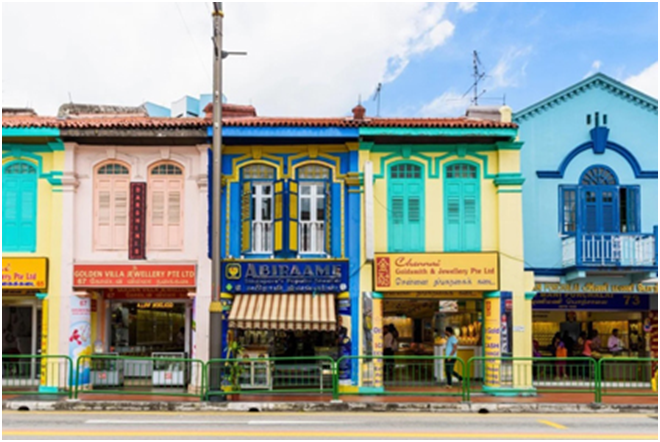
Diversity is a tool and a technique used in many fields and specialties. Know what is the connection between diversity and smart growth and does diversity lead to smart growth?
Smart growth was invented in the USA to reduce the expansion of low-density sub-urban sub-divisions as the predominant pattern of development in other words to stop the spread of urban sprawl. Therefore, smart growth research was circled for many years in the planning and design literature. Over time, researchers introduced many concerns about urban sprawl and smart growth. Whether as a policy, strategy, or set of guidelines, particularly in the USA.”
Kushner1 in his paper raised some concerns about smart growth. Like, smart growth policies that target development towards revitalization could result in the intensification of ethnic separation. Adding to that, the cease of democratizing and incubation function and quality of life and opportunity for new immigrants and the poor may diminish.
Chen2, in his research, introduced several concerns about urban sprawl. Specifically, he emphasized the need to direct policies, strategies, and guidelines towards smart growth. Furthermore, he pointed out that the unstoppable spread of such development leads to worse congestion. In addition, this expansion results in escalating tax rates, disinvestment in older communities, the devouring of open space, damage to the ecosystem, and increased pollution from automobiles. Ultimately, these issues highlight the urgent need for effective urban planning.
He presents and discusses the smart growth strategies that not only preserve open space but also redevelop urban areas. Additionally, he advocates for paying farmers to not sell their land for development. According to his research, smart growth involves in particular increased density. Moreover, primary development should focus on commercial spaces, large buildings, attached structures, shallow setbacks, streets and alley setbacks, sidewalks and passages, raised curbs, as well as single tree species. Ultimately, these elements contribute to a more sustainable urban environment.
Liu3 articulates that the Smart Growth Association of America has put forward 10 principles of Smart Growth in 1996. One of the existing developments that these principles have been applied to is in Figure 2.
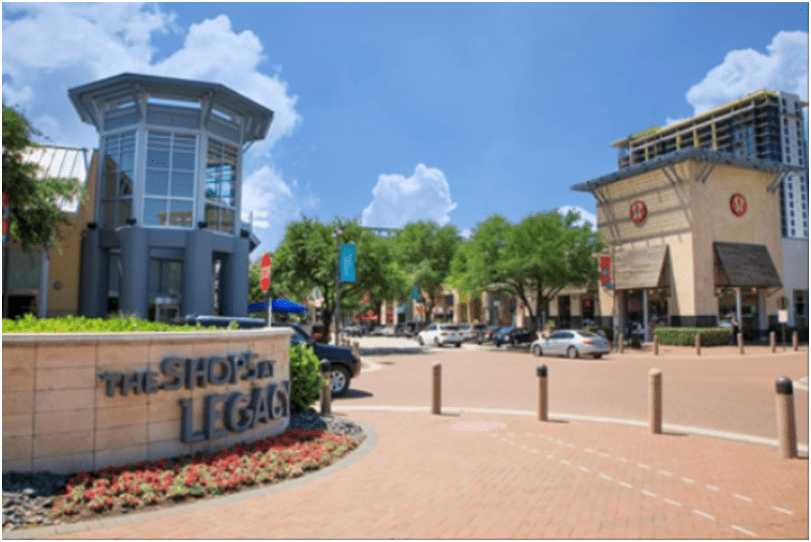
Smart growth strategies and planning principles appeared to stop one of the urban planning problems the urban sprawl which appeared mainly in the USA, North America, And Europe. Also, every couple of years a planning problem appears to lead to the invention of new principals. Importantly, smart growth does not differ in its planning principles from sustainable development. However, the aims of sustainable development differ slightly in terms of its main goal to use world resources effectively and to protect the resources for future generations.
Smart growth does not differ from Eco-cities principles. Also, many governments in Asia have implemented these principles to develop eco-town initiatives as well as build new towns for half a century like in Japan and China. Furthermore, smart cities ideas and concepts do not differ either from smart growth. Smart cities principles main goal is to achieve efficient transport planning within high-density development and sustainable development. Furthermore, adding to that the latest technology in designing buildings that already exist like using machine less elevators, occupant sensors for light, digital entries to buildings, and others.
Back to my piece on the mix of design in these two themes smart growth and diversity. diversity in design in use is shown in different ways. For one big job I did in the Mideast, I checked and gave input, for a home build, to add in the scheme a mix of scales of homes in terms of full home size, and parts like 2, 3, or 4 room homes. In the place of build, these homes draw a mix of people as buyers or renters from different types and levels of pay. By this means, the builder sold 30% of the homes at his set price even before the plan was done in the first phase of plan.
For the same development which included 12 residential buildings the consultant was changed three times due to a lack of knowledge of country regulations and the inefficient market research study, mainly from the UK. However, I have reviewed the building complex design and suggested redesigning the buildings to include studio flats, 2, 3 bedrooms but with a minimum 1-bedroom flat since they are the most demanded in the market and it is easy to sell and rent these units in the location of the development. Eventually, the building complex design was transferred finally to one of the biggest local consultancy firms which led the design and construction supervision to completion and handover. See Figure 3.
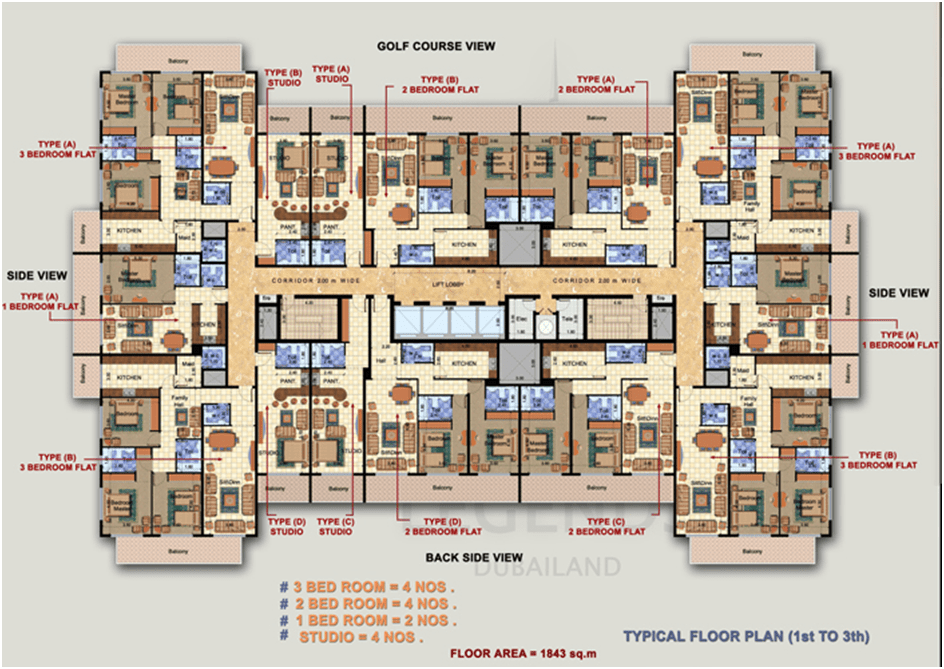
Urban design within the development of ideas, concepts, strategies, and principles serves this aim. Also, Urban design to revitalize old towns and communities, to direct the efficient use of resources in urban development. In addition, design and develop towns to protect our culture and heritage and to protect the environment and its species. Moreover, to use the latest technology in the architecture of the development and transportation, encourage the use of local materials to protect place character and identity. So, in the future, it’s SMART URBAN DESIGN to lead the urban development.
Where this fits in practice: I explain how smart growth and diversity reach real projects in Urbanism Role in Professional Practice: How Research Became Hidden Rules.
Related Topics
For deeper exploration, see related content on Environmental planning, Green architecture, Sustainable urban development, TOD , Architecture practice , Urban Design , Smart Cities.
References:
- Kushner, J.A. (2002) ‘Smart growth, New Urbanism and Diversity: Progressive Planning Movements in America and their impact on poor and minority ethnic populations’, UCLA Journal of Environmental Law and Policy, 21(1). doi:10.5070/l5211019395.
- D.T. Chen, D. (2000) ‘The Science of Smart Growth’, Scientific American, 283(6), pp. 84–91. doi:10.1038/scientificamerican1200-84.
- Liu, L.L. (2012) ‘An analysis of the influencing factors in new urban planning under the conception of smart growth’, Applied Mechanics and Materials, 174–177, pp. 2433–2439. doi:10.4028/www.scientific.net/amm.174-177.2433.
- Kim, J.I. and Hyun, J.Y. (2018) ‘Do smart growth urban development strategies reduce jobs-housing distance in a high-density city? the case of the seoul metropolitan area’, Journal of Planning Education and Research, 41(2), pp. 149–159. doi:10.1177/0739456×18773500.
- Salama, A. M. (2017). PLURALITY AND DIVERSITY IN ARCHITECTURAL AND URBAN RESEARCH. ArchNet-IJAR, 11(2), 1. https://doi.org/10.26687/archnet-ijar.v11i2.1280
- Korff, R. (1996). Global and local spheres: The diversity of Southeast Asian urbanism. Sojourn, 11(2), 288–313. https://doi.org/10.1355/sj11-2e
- Day, K. (2003). New urbanism and the challenges of designing for Diversity. Journal of Planning Education and Research, 23(1), 83–95. https://doi.org/10.1177/0739456×03255424
- Grant, J., & Perrott, K. (2009). Producing diversity in a new urbanism community: Policy and practice. Town Planning Review, 80(3), 267–289. https://doi.org/10.3828/tpr.80.3.3
- Moroni, S. (2016). Urban density after Jane Jacobs: the crucial role of diversity and emergence. City, Territory and Architecture, 3(1). https://doi.org/10.1186/s40410-016-0041-1