Urbanism: Intensification Policy & Urban Development Barriers is the seventh article of a series1,2,3,4,5,6,7,8,9,10,11,12,13,14,15,16,17 . It assesses the dialectic of architecture and urban design in the urbanism field. I will go through this relationship from the top scale of urbanism in the city to the smallest scale of urbanism components of urban space.
In the previous articles I have discussed and analyzed various topics of urbanism closely linked to this topic the intensification of urban development. Urban regeneration is one of the strategies to develop an area in a town. Gentrification is another strategy to develop a city core and center. Townscape movement and its aims and objectives to identify urban process and change.
Urbanism is always concerned with human life, quality of life, the urban environment, the city, the town, the neighborhood, and so on. Urbanism research is concerned with the effect of urban change in the city on human life. The development in one area and its effect on the quality of living, jobs, urban space, its usage, and the quality of the physical environment. Urban change could happen either because of political change or improvement in governance related to urban development. Economic shifts in the country impact public plans, especially for social housing and private investment. Funding and fiscal resources play a key role in linking the former.
Environmental change harms living creatures. Global groups work to create rules that nations must follow to address these issues.
I discussed urban change in past articles. It connects to many political, economic, and social plans. Gentrification greatly shapes neighborhood, town, and city growth. In the analysis of this strategy in the previous article, I have found that the main cause for gentrification is the rise of land price for a certain timeline that makes an existing development unbeneficial whether for the public sector or private sector but not to replace low-income people by higher-income people in the city.
Thus, this strategy planners used to stimulate economic development for deprived areas in the city. Also, enhancing the quality of the urban environment by providing modern landscape and urban design. In addition to changing the physical environment form by protecting the high-value heritage buildings and combining them with modern designed buildings. They aim to develop the infrastructure and public transport system to serve the city in more an efficient way and beneficial for all sectors of the country.
Problems Leading to Intensification urban development barriers
Our article is concerned today about intensification. Intensification is the increase in urban development densities to solve various problems. These problems range from:
- Developing derelict areas in the city having big land value.
- The demand for housing whether it a high rise or low rise.
- The demands for employment in city centers by providing commercial and business units.
- The demand for employment in city centers by providing commercial and business units.
- The demands for employment in city centers by providing commercial and business units.
- To respond to the demand of making an existing public network more efficient by increasing the number of travelers, to make a newly developed transit node more economical by increasing the surrounding development densities.
- Finally enhancing the urban space and green space in the city to the level required by the surrounding developments.
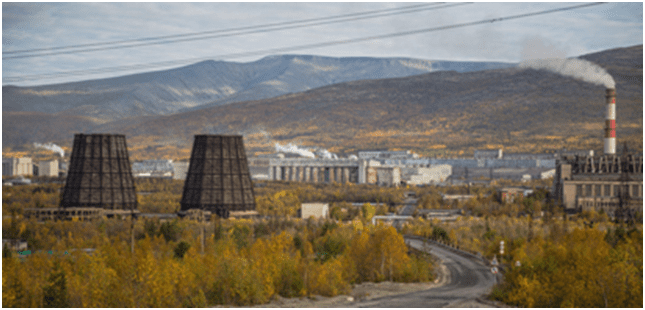
Intensification has been used and linked to the research and academic arena in the agricultural field. Khachaturov1 in his paper has mentioned valuable statistics related to intensification. The area of the world’s cities occupies only 0.5% while it is inhabited by 45% of the world’s population. The area occupied by the Russian population, industry (see Figure 1), and transport systems is only 1% of the nation’s area. The other land is farmland, forestry, and agricultural land. And these comprise two-thirds of the Russian nation’s land. Much of Russian land is suitable for agriculture but needs little spending and the intensification of this agricultural land needs various techniques and the government need to pay more attention to it. So, Russians need to do more scientific research on agricultural intensification to make land provide higher rates of production.
The government must look into the cost of intensification and identify where they need to pump high capital. A high percentage of Russian land available for intensification is subject to water erosion. And other environmental problems that land represent 45% of the total free land. Public or private sector must do Careful analyses and studies when selecting agricultural land for development before conversion. Many areas in the world witness agricultural land conversion to development land specifically for constructing road networks. Surely due to necessity for both agriculture and development. But the removed upper soil should be used to repair other agricultural land. Finally, the Russian researchers found that the discounted cost of the urban development densities in city centers is lower for sixteen stories than nine-story buildings.
Vinod2 in his paper shows the effect of various factors on land intensification and the link to population growth in India. He built three variables to examine the effect of intensification. The three variables are agroclimatic conditions and the levels of social and economic development. Population growth has a significant effect on agricultural intensification.
Otsuka3 in his paper analyses and studies the effect of various land-related issues and the effect of population growth on increasing agricultural intensification. Such issues like inverse farm size–productivity relationship, tenure security, tenure reform, land markets, migration, and livelihood opportunities.
These two studies address the topic of land intensification. Other researchers have also conducted studies on the same topic.
So far, I have highlighted intensification origin as a strategy in land development. Also, in which field it is linked. In urban development, intensification has a different purpose in the practice of urban design and planning. Combined research by various research centers and universities led by Shahtahmassebi4 defined a major cause for intensification in urban development. He says in recent years an increase in urbanization has led to an increase in sustainable ground transportation infrastructure. This system is identified by shorter travel times and distances, increased safety, energy efficiency, and reduced environmental impacts. Improving the transport system is a major factor in accelerating urban, rural, industrial, and economic development.
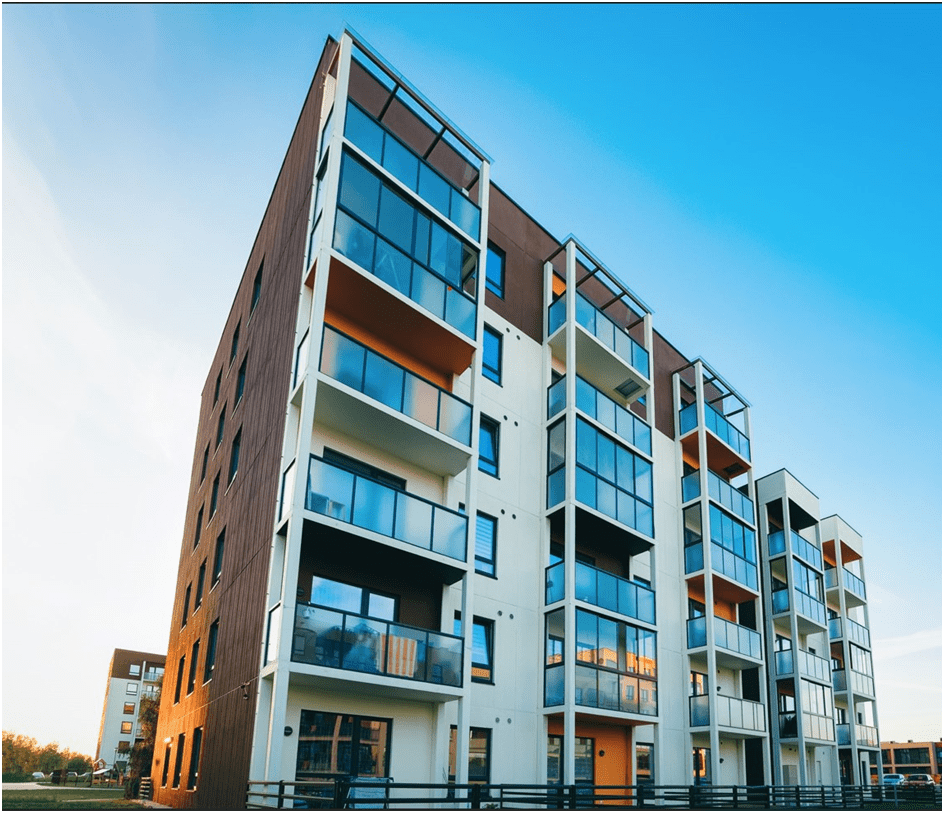
The 2020 National Policy Statement5 indicates several purposes for intensification in cities (see Figure 2). These are places in or close to urban centers where people can access many jobs, services, and amenities. In addition to Places that are well-served by public transport. other areas with high demand for housing and business space. In other publications from the Canadian context, the intensification policy is targeted for purposes like encouraging intensification of established areas. It is issued for those purposes. Also, increasing population growth in established areas through new residential development. To support the development of new commercial amenities and services in established areas.
These may draw both visitors and permanent residents to those areas. Further, enhance the vibrancy of established areas by encouraging the development of housing, mixed-uses, and commercial amenities and services. To assist developers with securing project financing from financial institutions. Finally, support the efficient use of land and infrastructure are developed and in place.
Other combined researchers led by Kim6 have studied the effect of land plots on urban intensification in city centers in cities in Australia. Land plots in the city center availability are one of the major factors that encourage intensification on important corridors of public transport and viable city walkway paths in commercial and busy areas. The smaller the plot is in terms of size it becomes a great barrier for intensification due to the feasibility of going high rise. Adding to that the number of delivered units whether residential or commercial will be less. Plot location is important when it is in the city center regardless of its proximity to the transit node when conducting intensification.
Intensification urban development barriers
Intensification urban development barriers include:
- The smaller the plot is in terms of size it becomes a great barrier.
- The other barrier is the provision of car parks when the plot is not served by public transport.
- Another barrier is to comply with the international environment policy of decreasing carbon emissions to the atmosphere.
- The amount of delivered units in the city center near public transit makes the unit rent high and not feasible and attractive for people (because of small intensification plots).
In analyzing the link between intensification in land and urban development, the purpose of conducting and issuing intensification policy, and the barriers to achieving urban development intensification. Notably, I have concluded that the main problem is Land Ownership. Surely, land ownership plays a great role in facilitating and accelerating urban intensification development. For example, small plots when owned by multiple owners will make development hard to achieve due to the efforts required to buy and integrate these plots within a large intensification program. Furthermore, every landowner has his development plans and fiscal capacity to develop and may be do not desire to acquire funds for development which makes intensification plans more difficult to achieve and this is for urban development intensification.
In the field of agriculture land ownership is also a major factor for conducting intensification because of the large size of land especially when funds are required for the intensification development. Acquiring these lands for developing transport networks for agricultural or other intensification development will face the same problem of land ownership.
The architect’s role in this scenario will be to analyze the discount project cost for the intensification, making a detailed study of the urban densities within a plot and which is more suitable for every land use commercial or residential. Defining ways to convince landowners to accept the intensification process by providing a feasibility study of construction cost and revenue.
Urban designers on the other hand will be responsible for defining in their urban development plan targeted for intensification program the land location. Also, defining the urban densities that suit the demand for population growth, and business demand for a certain type of workforce, which means types of land uses. Urban designers need to identify how they will achieve the demand for jobs in certain areas by indicating in their plans the availability of services, amenities, and other human needs in the city like the requirements for urban space and landscape. They will direct private and other sectors involved in the intensification program on the ways to acquire funds to finance their development. Lastly how this intensification program can avoid all the barriers, especially land ownership and to respond to all international environmental policy problems.
Where this fits in practice: I show how intensification policy meets cost, plot size and landowner consent in Urbanism Role in Professional Practice: How Research Became Hidden Rules.
Related Topics
For deeper exploration, see related content on Environmental planning, Green architecture, Sustainable urban development, TOD , Architecture practice , Urban Design , Smart Cities.
References:
- Khachaturov, T. (1986) ‘The intensification of land use’, Problems in Economics, 28(10), pp. 43–59. doi:10.2753/pet1061-1991281043.
- Mishra, V. (2002) ‘Population growth and intensification of land use in India’, International Journal of Population Geography, 8(5), pp. 365–383. doi:10.1002/ijpg.266.
- Holden, S.T. and Otsuka, K. (2014) ‘The roles of land tenure reforms and land markets in the context of population growth and land use intensification in Africa’, Food Policy, 48, pp. 88–97. doi:10.1016/j.foodpol.2014.03.005.
- Shahtahmassebi, A.R. et al. (2018) ‘How do modern transportation projects impact on development of impervious surfaces via new urban area and urban intensification? Evidence from Hangzhou Bay Bridge, China’, Land Use Policy, 77, pp. 479–497. doi:10.1016/j.landusepol.2018.05.059.
- Ministry of Environment. (2020) ‘National policy statement on urban development’, Fact Sheet [Preprint]. INFO 956.
- Dovey, K., Pike, L. and Woodcock, I. (2016) ‘Incremental urban intensification: Transit-oriented re-development of small-lot corridors’, Urban Policy and Research, 35(3), pp. 261–274. doi:10.1080/08111146.2016.1252324.