Urbanism: How does political governance create urban change? is the thirteenth article of a series1,2,3,4,5,6,7,8,9,10,11,12,13,14,15,16,17 . It assesses the dialectic of architecture and urban design in the urbanism field. I will go through this relationship from the top scale of urbanism in the city to the smallest scale of urbanism components of urban space.
In this article, I will analyze several political governance views and how they look into urban change. Urbanism is one side of the coin, and human interaction with surroundings represents the other. City officials have a direct effect on all of the former when deciding on a change.
Any political structure in any city includes the interrelated political governance and urban change. and also his responsible for the change and the structure and its influence. That happens regardless of what the state policy is, whether it is labor, democratic, capitalist, or communist. Politicians in a city drive urban change and the transformation of a society.
Now, what does political governance do? How political governance creates urban change?
Political governance is the criterion and rule that gauge and determine the appropriate action related to a critical matter in the society. What political governance does is regulate, guide, resolve, implement, and change any movement within the city and country that concerns the political body and government.
Political governance regulates people’s movement. Such as tourism work, immigration, and education. Countries in the world count on tourism as a main source of income. They regulate the type of tourism visa and the duration of stay. Also, they specify the type of visa a tourist can convert. Developing countries that lack the proper amount of skilled labor count on work as a source of income. Countries regulate the work visa type, duration of stay, and sometimes pay scale. Do people consider moving to other parts of the world for a better life? Every country issue governs related to immigration type. Such as writers, scientists, teachers, and others. In the USA, students in higher education follow certain types of regulations.
Money movement concerns all governments in the world. Here, I will show how political governance creates urban change in one way or another. They issue political governance to define the amount of tax a person pays for several activities. They also regulate public funds paid to people and businesses. For example, to cover families’ plans to take loans to start a business and to build a new home. Public funds are also available for development and large-scale businesses. Such as banks and finance companies. Unemployed people receive financial support from the government social network. Money cartels in the world move to other countries when they sense a good ground for investment by an international investment program. Political governance regulates the type of movement. For example, in France, investing a high amount of money, such as six million euro can lead to a reduction of permanent residency period.
European countries signed an international agreement to regulate trade between these countries. Political governance regulates trade movement between countries. Also, what types of goods countries allowed to enter, and what types of goods they allow to export. Businesses operating in the country whether they are local or regional are not exempt from fines. For example, people employed in a business should follow residency rules otherwise if they break them the business gets a fine. Governance covers many types of fines for all types of businesses operating in the countries. Business moves from place to place following either the cycle of investment or potential growth in any country in the world. Here the governance covers various aspects of opening a regional office and its related requirements for operations like staff, money, location, and others.
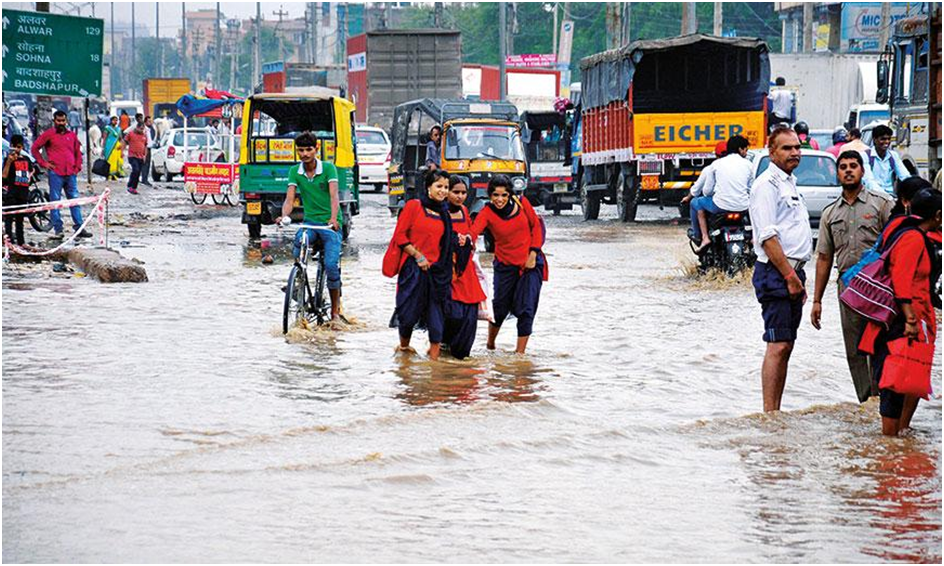
Developing countries’ political systems are always concerned with the development movement. Related to that tool of development urban regeneration, gentrification, intensification, and direct development. Political governance determines the location of development where deprived, or new development is to start. Adding to that the size and amount of development are specified by political governance as temporary or permanent due to its direct connection to market conditions and availability of stocks and protecting stock prices from decline. Defining the specific time for development is also related to political governance and in conjunction with private sector studies about the market and the proper time to start development in the general case. Here I have shown the many ways that political governance affects and creates urban change not necessarily physical but economic or social.
Political governance guide on how the management of organizations in the private sector. It provides a way for collective actions to be conducted regarding many societal problems that need collective choices. Political governance sets out the accountability of actors when building governance and setting goals and implementations. It defines the collective actions related to for example paying pensions, development of infrastructure, and providing healthcare for certain sectors of society and more. Political governance distinguishes the need for proper decision-making about the related governance issued. This guidance controls how to create urban change.
Creating a political governance include the involvement of many actors, from the public sector and private sector. Surely, all the political organizational structure participates in the creation of political governance. The government procedure of issuing governance is to collect feedback and coordinate its creation before it is distributed for action. Before the distribution, they involve the public in providing their feedback. they reserve a green paper for that purpose. After its publication for action, they collect feedback through coordination to stand on its efficiency in achieving its goals. The state issue political governance to resolve problems like the retirement age. In France, the retirement age was discussed within the public, and private sectors. They planned to raise it to 65 years rather than 60 years. The problem of an insufficient workforce in many sectors like education led to this movement.
To implement political governance many factors the state consider within its application. The level of involvement and the type of actors and their expertise and knowledge affect its realization. What is the process and procedure to evaluate the implementation? And what actors are included to participate in the exploration of its application and collecting feedback? In many cases, problems arise within the application and implementation of the political governance. Also, for defining the actors and the way negotiating is to be applied is a major concern. Within the structure and hierarchy of the political organization involved in the creation of the political governance implementation face the problem of authority and who holds the power to decide when required. To create urban change actors within the implementation of political governance hold several responsibilities. For instance, proper negotiation, evaluation, exploration, and practicing power for the government and society interest.
A certain step-by-step control issuing the political governance. Developed countries follow the steps of collecting feedback from within and outside the constitution. Thus, all levels of society, the educated and not, participate in creating them. here they call it the green paper, and the way of doing the work is called consultation. All involved will affect and create change in it. Also, political governance issued target specific change. For example, at what level of the political structure must they build a plan for submission for approval, like the Unitary plan? And this process witnessed many changes in the last century about who builds a plan. Surely, because many plants fail to achieve their goals and desired outcomes. Thus, these changes I refer to show how political governance creates urban change.
What do researchers, academics, and practitioners say about urbanism: political governance, and the creation of urban change?
Bollens1 said political governance affects a wide range of city change and transformation in terms of social, economic, and physical form that is through the response to certain groups of society within the political change to deliver acceptable change. The new political orientation and the need to develop the city aligned with the new political governance include economic development and human rights.
Blanco2 said the counterattack on austerity urbanism after the crisis of 2008 created a social tendency towards taking over the government by social movements, changing the political leadership of neoliberalism and their defects in urban change, and rescaling the political strategy of change.
McCann3 It is impossible to discuss policy mobility, policymaking, governance, or the character of urbanism without positioning considerations of power and the political at the heart of the analysis.
Chorianopoulos4 said within his research, political governance is targeted to solve social problems in the examination focuses on key social policy programs launched recently by the City in an attempt to ameliorate extreme poverty and social despair.
Harvey5 his research focuses on entrepreneurial urbanism and in which manner it led to the restructure of the social, and economic governance. He points to the interrelationship between the urbanization process and capitalist social relations and accumulation based on three claims: First, public–private partnership working alongside local government was to boost local economies. Second, the private sector took the lead in the partnership, and they were innovative in design and delivery. Third, entrepreneurial urbanism changed focus from territory to place focusing on civil projects.
Sýkora6 discusses the failures of the neoliberalism political approach in building governance and how it created massive market failures and crises. whereas neoliberal ideology implies that self–regulating markets will generate an optimal allocation of investments and resources (what neoliberal was intended to do but the results were negative.
Magnusson7 book shows important factors about the relationship between political governance and urbanism. Also shows that everyday life not a state that directs the attention of politics. Thus, it creates many problems such as poverty, injustice, waste, and violence. In addition, turning the Venue of political governance from the state to everyday life did not create any difference. So since the state is sovirgein thus, what counts as politics is under its power. These include election, authority, ideologies, interests, and identity. That shows the state creation of political governance determined by economic interests, national loyalties, and religious commitments. In addition to everyday human concerns below the level of statesmanship. Its effect in the city makes things happen and several patterns. They happen continuously and are hard to predict by global or local change. One can trace and monitor patterns of change and signs of Change.
Finally, the relation between political governance, urbanism, and everyday life politics does not dictate any sort of practices due to the changes. But it is practiced in the same way.
What are the concerns of architects and urban designers about how political governance creates urban change?
Returning to my article concern about the intervention of architecture and urban design. political governance does create urban change. Architects are concerned and should participate directly in any venue, summit, and symposium that discusses the city, town, and our physical environment problems and how they should be changed through the initiation of a new political governance or changing the existing one. Architects to focus on what are the obstacles to realizing their architectural design of buildings within the city, what should be changed, how can public actors and the private sector participate in facilitating building realization approvals, what restrictions should be removed as rules in practice or enhanced, and how can private and public sector bring equity in distributing projects to all architectural business in operation in the city.
Urban designers are concerned about the process of building the local plans by the urban planners and related disciplines like geographers, economists, engineers, transport planners, historians, and others. What are the major concerns of urban designers in the political governance that dictate the creation of the local plan and what should be changed and enhanced? What are the unseen parts of the city that need direct attention like the urban space decline, the destruction of green space and nature, the distorted character of a place and cultural context, the effect of the building forms on the urban fabric and its daily use and comfort, how is the city transport network performing and if any enhancement is required, and how can we bring life to the city by proper distribution of economic activities that fit the context of the city and gives it the continuity and prevent decline.
Political governance has created one of the most innovative urban developments in the world SILICON VALLEY in the USA. The development was the cause of many innovations that were affecting human life and still to date like the personal computer, the GPS, smartphones, online search engines, and others see Figure 2.

An exact copy has been planned, designed, and built in the Middle East region blindly that did not contribute to anything. This Urban development was based on chaos, unnatural and unplanned urban growth, a misconception of the idea of Silicon Valley, and the absence of proper political governance or urban policy. Political governance can create urban change that fits the city’s urban growth and responds to the society’s needs.
Where this fits in practice: I explain why research rarely reaches the meeting with the developer in Urbanism Role in Professional Practice: How Research Became Hidden Rules.
Related Topics
For deeper exploration, see related content on Environmental planning, Green architecture, Sustainable urban development, TOD , Architecture practice , Urban Design , Smart Cities.
References:
- Bollens, S.A. (2008) ‘Urbanism, political uncertainty and democratization’, Urban Studies, 45(5–6), pp. 1255–1289. doi:10.1177/0042098008089868.
- Blanco, I., Salazar, Y. and Bianchi, I. (2019) ‘Urban governance and political change under a radical left government: The case of Barcelona’, Journal of Urban Affairs, 42(1), pp. 18–38. doi:10.1080/07352166.2018.1559648.
- McCann, E. (2017) ‘Mobilities, politics, and the future: Critical geographies of green urbanism’, Environment and Planning A: Economy and Space, 49(8), pp. 1816–1823. doi:10.1177/0308518×17708876.
- Chorianopoulos, I. and Tselepi, N. (2017) ‘Austerity urbanism: Rescaling and collaborative governance policies in Athens’, European Urban and Regional Studies, 26(1), pp. 80–96. doi:10.1177/0969776417733309.
- Harvey, D. (1989). From Managerialism to entrepreneurialism: The Transformation in Urban Governance in Late Capitalism. Geografiska Annaler Series B, Human Geography, 71(1), 3–17. https://doi.org/10.1080/04353684.1989.11879583
- Sýkora, L. (2009). Post-Socialist cities. In Elsevier eBooks (pp. 387–395). https://doi.org/10.1016/b978-008044910-4.01072-5
- Magnusson, W. (2011). Politics of Urbanism: Seeing like a city. https://ci.nii.ac.jp/ncid/BB07107717